
Two-thirds of Slovaks are struggling to make ends meet and companies are struggling with tied-up capital, lack of access to financing and low flexibility. And yet, wages in 2026 are still being paid in a way that has barely changed in the last hundred years. Once a month, on a set day, regardless of how the economy is actually performing or the needs of employees and employers.
The context in which this project was created is important. Slovakia is facing a demographic crisis, a talent drain and a relatively rigid labour market. Peter Čapkovič’s decision to return home is all the more remarkable. After studying at Princeton and a career of more than ten years at J.P. Morgan in London and New York, where he worked in bond trading, data analytics and artificial intelligence, he decided to bring his expertise back to Slovakia.
As he says, wages are the most important cashflow of the economy. It accounts for about half of all GDP, and is often the only source of income for the employee and the biggest cost for the employer. Yet the way they are paid is a relic of a bygone era. The employee waits until the middle of the following month to be paid, and the employer has to keep capital ‘on the hoof’ in order to be able to pay wages on one particular day. Therefore, one unexpected item – a broken down car, a higher bill, a medical expense – can quickly cause a budget to fall apart and debt to follow.
According to WageNow, this relic of the past can be replaced by a model that works thanks to fintech technologies, API integrations, modern data processing and at the same time respects European legislative frameworks. And these played a crucial role in the choice of Slovakia as a pilot market.
The idea behind WageNow is simple, but its implementation requires a great deal of legal and financial engineering. With this service, the employer does not have to tie itself to a traditional payroll deadline and does not have to keep working capital “frozen” until payday. It can invest, spin, streamline, and use the money according to the needs of the company’s growth and development.
The employee has the possibility to receive his/her salary on an ongoing basis. This means that if he or she works on the first day of the month, he or she can collect a pro-rata portion of his or her wages from the app on that day. He doesn’t wait weeks. He doesn’t have to deal with short-term loans or limit situations. He simply works and receives on an ongoing basis what he is already entitled to.
This principle is both psychologically and economically significant for the employee. Research shows that most of the problems with “going from paycheck to paycheck” are not only caused by low wages, but also by inflexible earnings periods. One broken-down car will break your entire budget if you have cash resources tied up for three more weeks. An ongoing approach to earnings mitigates this effect and reduces the pressure to use expensive non-bank loans.
It is also a benefit that does not create any debt for the employee. It is not a consumer loan, nor is it a credit product. It’s just a change in when the employee gets access to the money they’ve already worked for in real terms.
WageNow started in Europe for a simple reason: the European legislative ecosystem provides guarantee mechanisms that are absent in the US. The Slovak equivalent – guarantee insurance – is a key pillar of the whole model.
If the employer becomes insolvent, it is the Social Insurance Guarantee Fund that is responsible for the payment of wages to the employee. The employee is thus not at risk. WageNow, which has paid his wages earlier, enters the process as an entity that can enforce its claims through the guarantee mechanisms of the State. This is what makes it possible to reduce the financing costs of the whole model and to make the service affordable.
There is no similar state guarantee element in the American system. This increases risk and makes the model less scalable. Europe therefore has a natural advantage for this type of innovation.
Every project that is a world first also brings world first legal issues. When setting up WageNow, we deal with a lot of details that determine whether the whole system will work smoothly, risk-free and legally compliant.
For example, it must be set up so that it is not a consumer credit for an employee. At the same time, however, it is financing which must not be subject to VAT. The consideration for a service for the employer must not qualify as a deposit, as it could belong to the employer’s estate in insolvency proceedings. Contracts must be capable of electronic and bulk signing so that they are usable even if the employer’s business or startup grows to tens of thousands of employees.
Transaction tax is also a big topic. When the project is set up correctly, the transaction tax is applied to only one single payment – the one that comes from the employer in the monthly settlement. Not on hundreds of microtransactions towards employees. This makes the cost lower than it might at first appear.
These details are not visible on the surface. But they are exactly what determines whether a project has the long-term space to function, grow and expand. At Highgate Group, we’re part of the process from day one. From technical brainstorming, to legal opinions, to discussions with foreign investors.
In the coming months, large-scale financing through foreign banks and asset managers is being addressed. The Slovak market does not yet provide capital solutions suitable for this type of product, which is why stable foreign financing is being sought. The ambition is clear: to obtain a sufficiently large “balance sheet volume” that can be shifted to Slovak companies and to release working capital to them.
In parallel, the startup is preparing to expand to other European Union countries. Slovakia was a natural pilot. Also thanks to the guarantee system and the fact that the entire legal and tax design could be set up comprehensively and predictably.
For us at Highgate Group, this project is a demonstration that law, tax and regulation should not be a brake on innovation. They should open doors for them. Slovakia can be a place where fund, fintech or payroll innovations are created and then exported across Europe. WageNow is a concrete example that this is possible.
We are the Highgate Group, modern advisors for your law, tax and accounting under one roof.
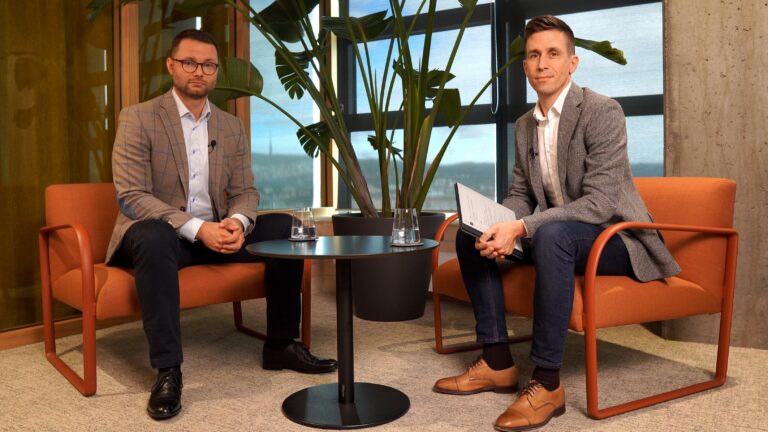
You can watch the full podcast here:
If you don’t want to miss out on more expert articles, analysis and practice stories, subscribe to our newsletter.
Alternatively, you can address your specific questions in a consultation with our partner Peter Varga, who specialises in financial regulation and tax law. You can book a consultation here: