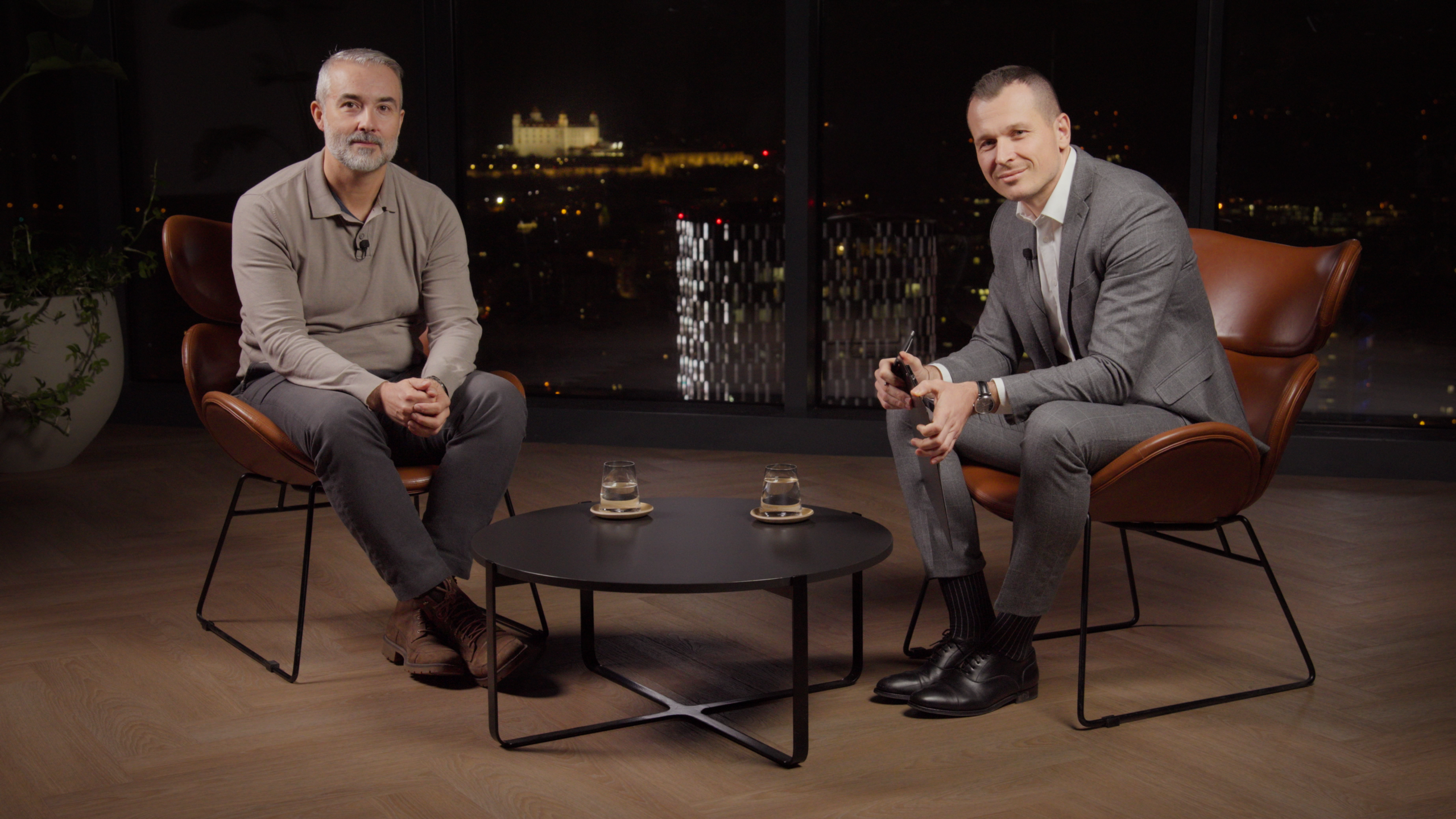
Moving business or personal life abroad, especially to Austria, is an increasingly common consideration for many Slovak entrepreneurs. The reason for this is usually a desire for a more stable environment, a more predictable legal framework or simply a feeling that “it works better elsewhere”. However, the reality is significantly more complex and in many cases surprising. Peter Varga and Paugger Ulrich discuss where doing business is actually more profitable, and what all needs to be taken into account when making such a decision, in episode 35 of our Highgate Talks podcast. We also bring you a short summary of the main conclusions in this article.
There has long been a negative sentiment towards the business environment in Slovakia. Politics, legislation or regulatory interventions are often perceived as a barrier. Nevertheless, there are aspects that make Slovakia a relatively comfortable environment for business. One of them, for example, is the low intensity of tax controls. The capacity of the tax administration is limited and systemic enforcement is not as rigorous as in Western countries.
Compared to Austria, this is a fundamental difference. While in Slovakia there are thousands of inspections per year, in Austria it is common for an entrepreneur or consultancy firm to have several tax inspections going on at the same time. This is a standard exercise of supervision by the state, which is considerably more intensive and systematic.
Austria is often perceived as a stable and well-functioning environment. This image is largely true, but it should be added that this stability is redeemed by a higher tax burden and significantly stricter controls. A typical example is the approach to cars in business. In Austria, in most cases, it is not possible to deduct VAT on passenger cars, while at the same time there are additional registration taxes that can significantly increase the purchase price of a vehicle. Depreciation is slower than in Slovakia and the overall tax burden associated with car ownership is significantly higher.
The situation is similar for income taxation. Although the corporate tax rate is comparable, the fundamental difference arises at the level of individuals and dividends. In Austria, dividends are taxed at a rate of approximately 27.5% and progressive taxation of individuals can reach up to 50%. Combined, this means that the entrepreneur can reach an effective taxation that is significantly higher than in Slovakia.
At the same time, Austria strictly controls the use of corporate assets for private purposes. Practices that are relatively widespread in Slovakia are subject to sanctions in Austria and may also have criminal consequences. The difference lies not in the legislation itself, but in its application and enforcement.
One of the most common mistakes Slovak entrepreneurs make is to move to Austria without understanding the tax implications. A typical scenario is a situation when an entrepreneur changes his/her place of living but keeps his/her business in Slovakia. In this case, however, he may become an Austrian tax resident, which means that his worldwide income is subject to Austrian tax.
The key factor is the so-called centre of life interests. If the entrepreneur has family, housing and social ties in Austria, it is very likely that he or she will be considered Austrian tax resident, regardless of where the business is formally established.
This can result in a situation where the income from the Slovak company is subject to a combined taxation that is ultimately close to 50%. This effect tends to be unexpected for many entrepreneurs.
However, there are legal solutions that allow these impacts to be optimised, for example through the use of transparent structures, but getting them right requires a detailed understanding of the differences between the legal and tax systems of each country and, in particular, their implementation before the transfer takes place.
This is an area that we have been working in for a long time at Highgate Group. We combine legal, tax and accounting aspects so that the resulting solutions are not only theoretically correct, but also practically functional in a real business environment.
In conclusion, the decision between Slovakia and Austria is not black and white. Slovakia still has strong competitive advantages in many areas, while Austria brings a higher degree of stability at the cost of higher tax and regulatory pressure. The key is therefore not to make decisions based on gut feeling, but on data and the right structure.
We are the Highgate Group, modern advisors for your law, tax and accounting under one roof.
If you are interested in similar practical insights from the business environment, subscribe to subscribe to our newsletter.
Full episode of the podcast Highagte Talks #35 with Peter Varga and Ulrich Paugger can be heard here:
Do not hesitate to contact us:
Alternatively, you can address your specific questions in a consultation with our partner Peter Varga, who specialises in financial regulation and tax law. You can book a consultation here: