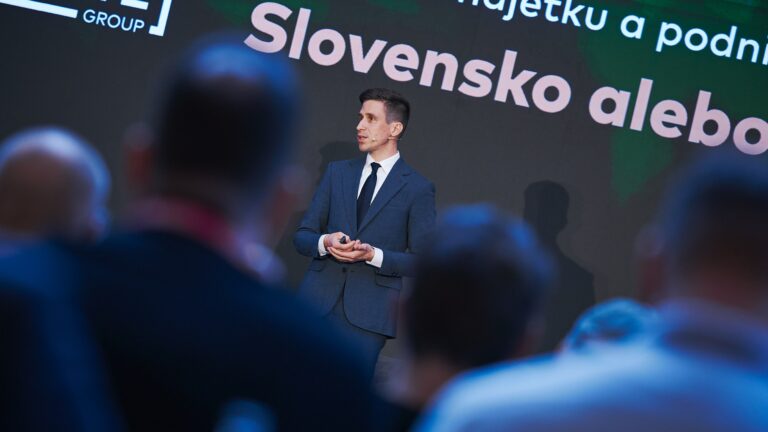

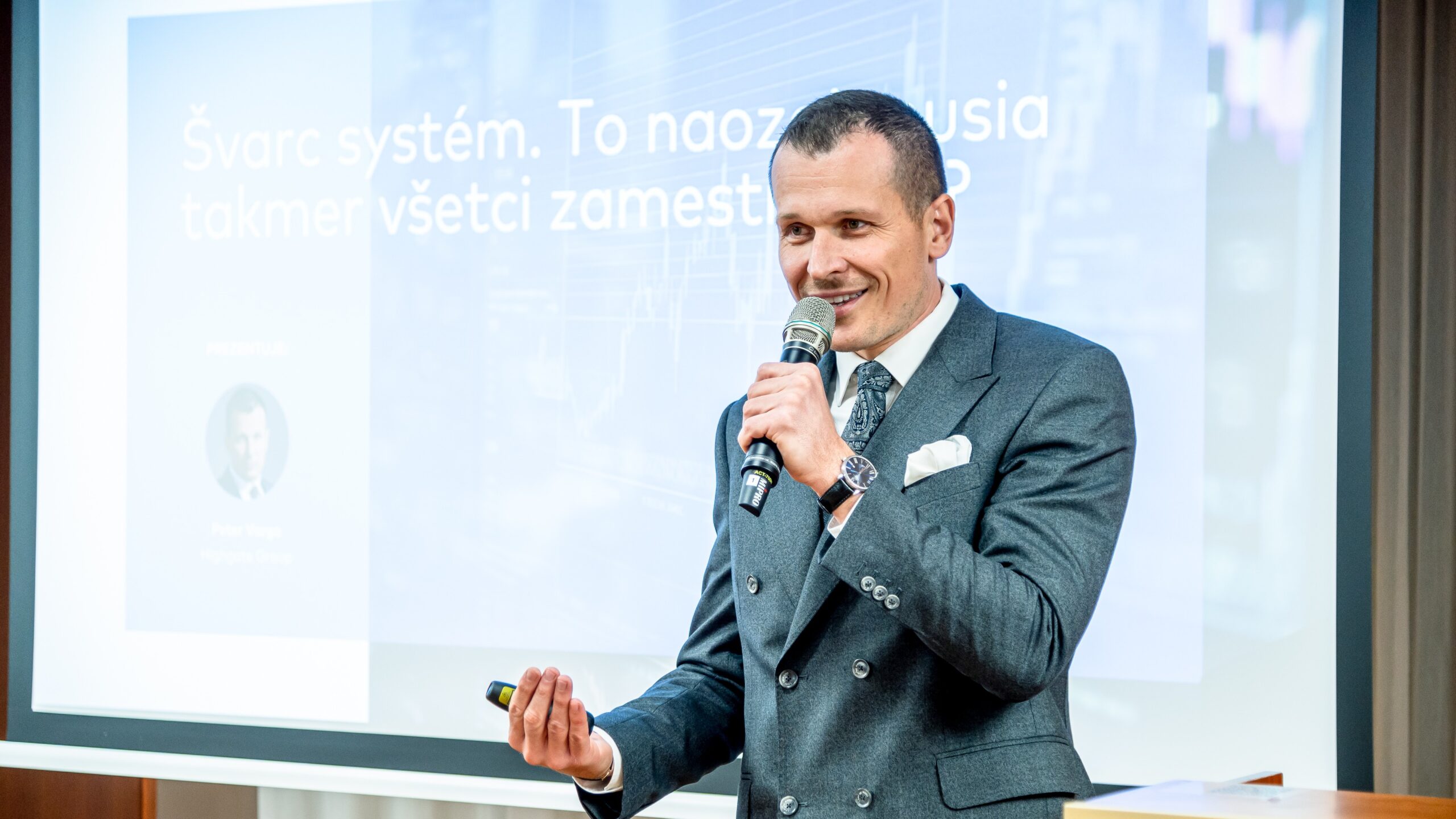
Why shouldn’t a shop assistant be a sole trader? The Švarc system is one of the most frequently used terms in the Slovak business environment. Traditionally, it is presented as a clear problem that needs to be suppressed. However, the reality of today’s labour market, tax-tax settings and constitutional principles is considerably more complex. At the SLOVCA Flagship 2025 conference, Peter Varga looked at this issue from a legal, economic and constitutional perspective and presented a legal opinion to the attorneys, based on which even a salesperson in Eurovea can be a sole trader (contractor).
The discussion about the shvarc system is often conducted in a moralistic tone. However, the employment of ‘freelancers instead of employees’ is largely a consequence of the extreme tax-tax arbitrage between different forms of employment.
Differences between employee, sole proprietor and sole proprietorship s. r. o. are so significant for the same economic performance that the market naturally reacts to them. Even after the recent consolidation measures, the contractor model remains economically more profitable for many professions, often without any fraudulent intent. In our view, this is a systemic problem, not an individual failure of entrepreneurs.
The Labour Code defines dependent work through a number of features. In practice, however, a purely mechanical, grammatical interpretation is often applied, regardless of the context, the will of the contracting parties or the actual socio-economic conditions.
Both case law and legal theory make a distinction:
The automatic assumption that all personal and regular activity is dependent work does not hold up either legally or economically. Interpretation of the law must reflect the reality of the labour market in 2025, not the high unemployment situation of twenty years ago.
A key aspect of the whole debate is the constitutional dimension. Freedom of enterprise is a fundamental right and its restriction must pass the proportionality test. The question is therefore not whether the state can regulate the shvarc system, but: whether it pursues a legitimate aim, whether the means chosen are proportionate and whether there are less invasive alternatives.
If the main objective is to consolidate public finances, there are simpler and more transparent instruments than reclassifying contractual relations retrospectively and with liquidating consequences. Moreover, the interference with property rights and legal certainty of entrepreneurs often has much wider implications than the legislator admits.
At Highgate Group, we take a pragmatic, legal, tax and business approach to the issue of the shvarc system. Our aim is not to circumvent the rules, but to help clients set up relationships that:
Simple and punitive solutions do not work in this area. More sophisticated interpretation, professional debate and systemic changes that reflect the realities of the modern labour market are needed.
We are the Highgate Group, modern advisors for your law, tax and accounting under one roof.
If you would like to receive more expert articles, analysis and practical insights from the business environment, please subscribe to our newsletter.
If you are interested in this topic, please do not hesitate to contact us:
Alternatively, you can address your specific questions in a consultation with our partner Peter Varga, who specialises in financial regulation and tax law. You can book a consultation here: