
Invoicing by an owner or executive to their own company is a relatively common practice in Slovakia. A sole proprietorship, a privately owned limited liability company (s. r. o.), a licensing agreement, or another contractual relationship may be more attractive from a tax and social security perspective than a traditional executive’s salary. However, this does not mean that they are automatically risk-free. Where is the line between a legitimate compensation arrangement and a relationship that the tax authority might question?
At Highgate Group, we regularly encounter the question of how to effectively and justifiably withdraw funds from one’s own company. It is one of those practical issues where tax law, commercial law, social security contributions, and the day-to-day operations of Slovak entrepreneurs all intersect.
That’s why we also covered it in Episode 55 of Highgate Talks, in which Peter Varga and Tomáš Demo discuss invoicing by owners and executives to their own companies, the risks involved, and ways to structure such a relationship.
You can listen to the entire podcast here:
A company owner who is also its managing director and actively participates in its operations has several options for transferring money from the company to his or her personal assets.
One of these is the traditional executive compensation or salary. In practice, however, this is often a less attractive option from the perspective of the overall tax and social security burden.
This is one reason why, in practice, we often see business owners setting their executive compensation at zero or a very low amount and obtaining money from the company through other means. These may include, for example:
However, each of these methods operates under a different legal and tax framework. The mere fact that a particular model appears more advantageous from a mathematical standpoint is therefore not sufficient.
When determining compensation for business owners, we at Highgate Group take a comprehensive view of the entire relationship. It is not enough to simply calculate taxes and contributions. It is also necessary to assess the legal basis for the payment, the actual nature of the work performed, the relationship between the parties, and the ability to justify the arrangement in the event of an audit.
This is where one of the biggest practical problems arises.
Let’s imagine the CEO of a technology company who is also a programmer. As CEO, he manages the company’s business operations, but at the same time, as an expert, he may contribute to the development of its product. Is this still considered part of his duties as CEO, or is it a separate activity that he can provide to the company under a different contractual arrangement?
From an economic and practical standpoint, there may be a fundamental difference between these activities. However, Slovak case law creates the risk of a broad interpretation of an executive’s income.
In the podcast, Peter Varga also gives the illustrative example of a “singing CEO.” If a CEO is also a musician and his band performs at a company party, it would be strange to claim that his singing performance automatically constitutes the performance of his duties as CEO.
It is precisely the distinction between performing the duties of a statutory representative and engaging in independent business or professional activities that is therefore crucial when invoicing one’s own company.
According to the discussion, there is case law in the Czech context that, in certain situations, allows for a more liberal assessment of separate activities. In Slovakia, the situation is less clear-cut, and there are decisions that may support a more restrictive approach.
For a business owner, this means that it is not enough to say, “I actually provided this service.” It is also necessary to be able to demonstrate why this is not an activity that he was already required to perform by virtue of his position as managing director.
If the tax authority questions invoicing between a managing director or another company owned by him or her and the “parent” company, the problem may not be limited to the contract itself.
In practice, the classification of income, for example, may be disputed. Another possible approach is to challenge the tax deductibility of the expense on the company’s side.
The argument may be that the invoiced service should have been performed directly by the managing director in his official capacity. If, in the tax administrator’s opinion, the company would not have contracted a third party to perform the work under normal circumstances, a dispute may arise as to whether the relevant expense constitutes a tax-deductible expense at all.
At Highgate Group, we also have experience with tax audits and disputes involving similar arrangements. Our experience shows that what matters is not only the resulting economic model, but also how the relationship was structured from the outset—both legally and in practice—and how the tax proceedings themselves are subsequently conducted.
It is therefore significantly better for a business owner to ensure the structure is defensible before an audit, rather than waiting until the tax authority begins requesting contracts, invoices, and evidence of the actual provision of services.
There is no universal guideline that would ensure zero risk. Invoicing between related parties requires a case-by-case assessment of the specific relationship.
High-quality contractual documentation is essential. However, the contract itself is not a panacea. What is written on paper must correspond to what is actually happening between the parties.
It is particularly important to clearly distinguish between activities performed in the capacity of an executive and services provided on a different legal basis. The arrangement must also make sense in the broader context of the entire compensation structure. It is also important to consider the evidentiary situation in the event of a tax audit.
For example, if a business owner invoices a company for professional services through a sole proprietorship or his or her own limited liability company, he or she should be able to demonstrate exactly what was provided, under what terms, why it constitutes a separate business activity, and how the compensation was determined.
In other words, it is not enough to issue a formally correct invoice. The actual nature of the entire business relationship may be the deciding factor.
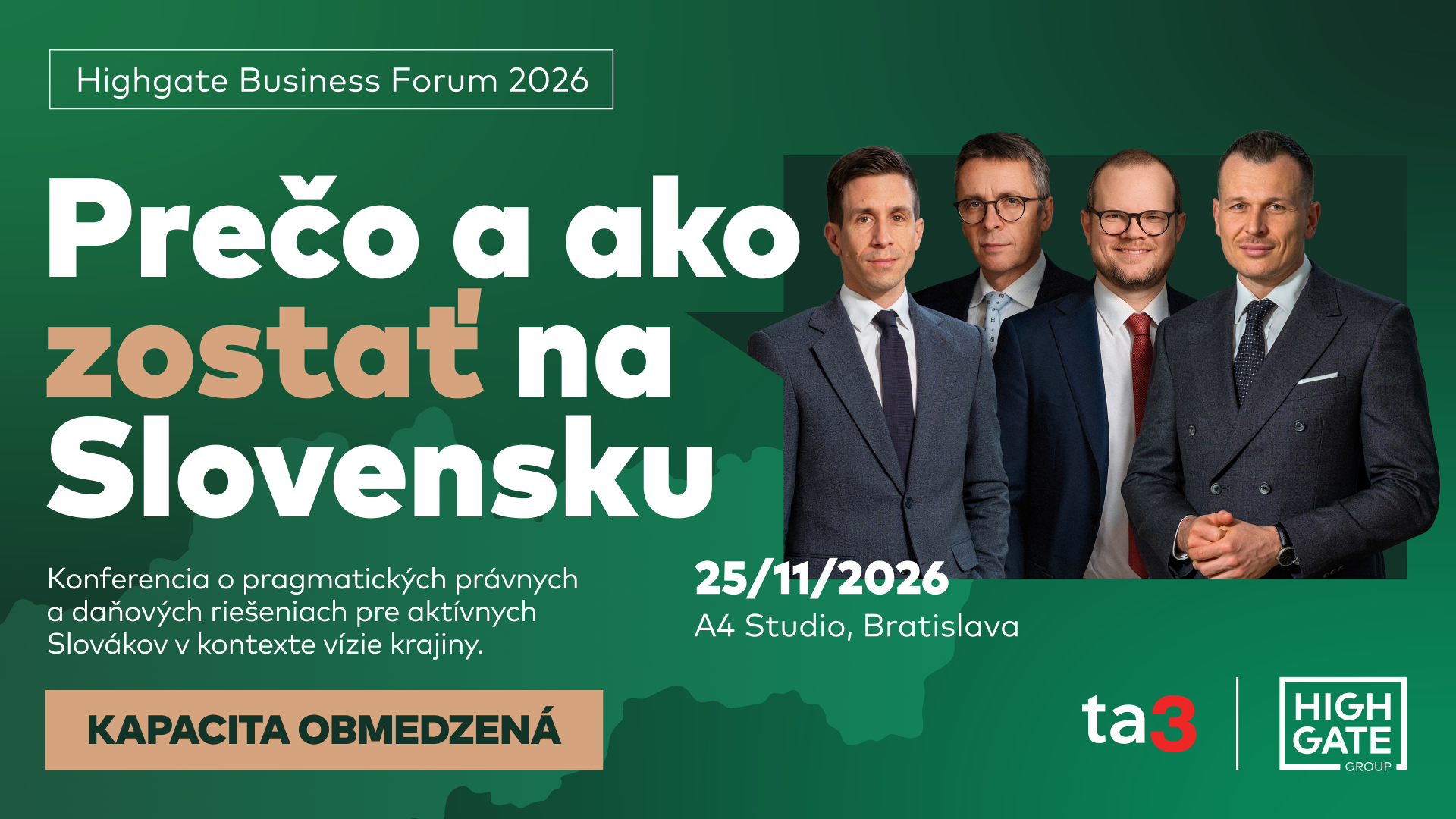
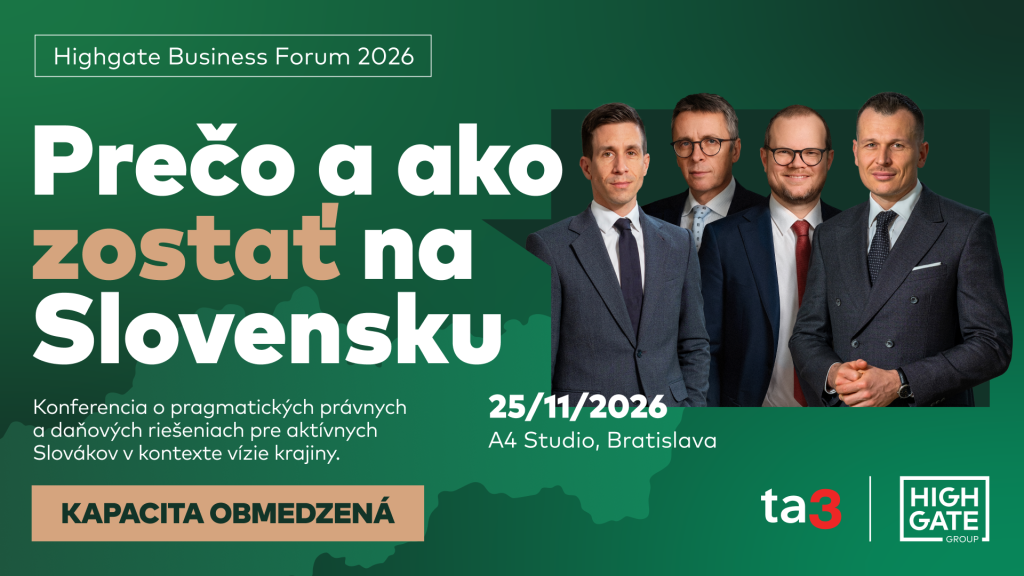
That is one of the reasons why we will discuss this issue in greater detail at our conference “Why and How to Stay in Slovakia?”. We’ll look at practical options for paying out business owners, the tax and social security implications, as well as the legal and audit risks.
The difference between the various methods of paying the owner can be financially significant. However, the lowest tax and social security burden does not in itself mean the best solution.
When making these arrangements, it is necessary to consider, in their entirety, taxes, social security contributions, the managing director’s status under commercial law, transfer pricing, the actual nature of the services provided, and the risk of having to provide evidence during a tax audit.
At Highgate Group, we focus on precisely these kinds of comprehensive solutions. Our goal is not simply to find the mathematically cheapest option, but rather a solution that is practical, tax-efficient, and legally sound.
We are the Highgate Group, modern advisors for your law, tax and accounting under one roof.
If you are interested in this topic, please do not hesitate to contact us:
You can find more information on tax and contribution optimization on our website in this section: Tax and Contribution Optimization
If you are interested, you can subscribe to our newsletter for interesting practical legal and tax information.
You can address your specific questions during a consultation with our partner, Peter Varga, who specializes in financial regulation and tax law. You can schedule a consultation here.