
Do you have an investment or business project and need to raise capital for it? A fund may not be the only or even the most suitable solution. Depending on the project, the investors, and the planned financing method, a fund structure, a bond offering, crowdfunding, or another model might make more sense. The deciding factors aren’t just costs, but also regulations, taxes, and the way you want to approach investors.
The Slovak market has not been an easy environment for raising capital from venture capital or private equity investors in recent times. Entrepreneurs are therefore naturally seeking alternative ways to finance their projects.
We also covered this topic in Episode #56 of the Highgate Talks podcast, featuring a discussion between Roman Baranec and Peter Varga.
You can can be listened to here:
The fundamental question may not be “What kind of fund should I set up?”, but rather “Do I even need a fund?”
A typical example is an entrepreneur who identifies an investment asset—such as a real estate project—and wants to raise capital from multiple investors to finance it.
Simply raising money from multiple individuals does not automatically mean that every such structure must function as an investment fund. The assessment examines several legal characteristics of collective investment, and there are also situations in which an exemption may be applicable.
In practice, therefore, when setting up the structure, we analyze the specific business model and prepare a feasibility study for each option. The result may be a fund, but it could also be an entirely different form of financing.
The difference can be significant. A fund structure typically entails regulation, governance requirements, and additional costs. However, if the project meets the conditions for collective investment and no exemption applies, regulation cannot simply be circumvented.
Operating a model that has the characteristics of collective investment without the necessary authorization may result in oversight by the National Bank of Slovakia, enforcement proceedings, a ban on operations, and potentially even criminal consequences, which the National Bank of Slovakia often initiates.
Therefore, it is important to complete the regulatory review before the entrepreneur actually begins raising capital from investors.
The legal framework governing alternative investment funds is harmonized to a certain extent within the European Union. However, this does not mean that establishing a fund in Slovakia, the Czech Republic, Croatia, or Luxembourg will yield the same result.
It is particularly important to distinguish between the fund’s regulatory framework and its legal form.
The regulatory framework determines, for example, what the fund can invest in, how it should be managed, and what risk management rules it must follow. The legal form can influence, for example, the types of shares, investors’ voting rights, and their options for entering and exiting the fund.
Differences between individual countries can therefore be significant even for similar projects. A real estate fund may have different requirements than a crypto fund, a venture capital fund, or a fund investing in art.
Costs also come into play when selecting a jurisdiction. Generally speaking, more established Western European fund jurisdictions may offer certain advantages, but they are also typically more expensive.
Slovakia, however, is not necessarily a worse alternative. In certain cases, a Slovak structure may be less expensive and more efficient than a foreign solution. Advantages may include lower costs, certain tax characteristics, or fewer practical requirements for the structure’s operation.
Therefore, there is no one-size-fits-all answer as to whether a fund should always be established in a specific country. The appropriate jurisdiction depends on the assets, the type of investors, the planned capital amount, the distribution method, and the tax structure.
A fund is just one option for raising external capital.
For a medium-sized company that is unable or unwilling to finance a project through a bank loan, issuing bonds may be an alternative.
With a bond, the investor typically provides capital to the issuer, and the issuer is obligated to repay the principal and pay the agreed-upon yield. The investor therefore does not bear investment risk in the same way as an investor in a fund, but is exposed to the issuer’s credit risk.
For some projects, a bond structure can also be significantly less expensive than setting up a complex fund, while still targeting a similar group of investors.
Another alternative is crowdfunding. A project can be listed on a crowdfunding platform and raise capital through, for example, loans, bonds, or shares.
Other models may also be considered, including peer-to-peer financing, the issuance of cryptoassets, or, for larger projects, even an IPO.
The right question, therefore, is not which of these instruments is generally the best. What matters is which model best suits the specific project, investors, and business strategy.
Although Slovakia cannot be considered a traditional European fund jurisdiction, it can offer interesting practical advantages for certain structures.
One such advantage may be lower costs compared to certain foreign jurisdictions. These differences can manifest not only in the initial establishment of the structure, but also in advisory fees and the requirements for its ongoing operation.
Another practical advantage of the Slovak regulatory environment may be the accessibility of the regulator. In our experience, in certain cases it is possible to present the proposed business model to the National Bank of Slovakia and consult on problematic issues even before the actual licensing proceedings or other procedural steps begin. This approach can help identify potential problems even before the application is submitted.
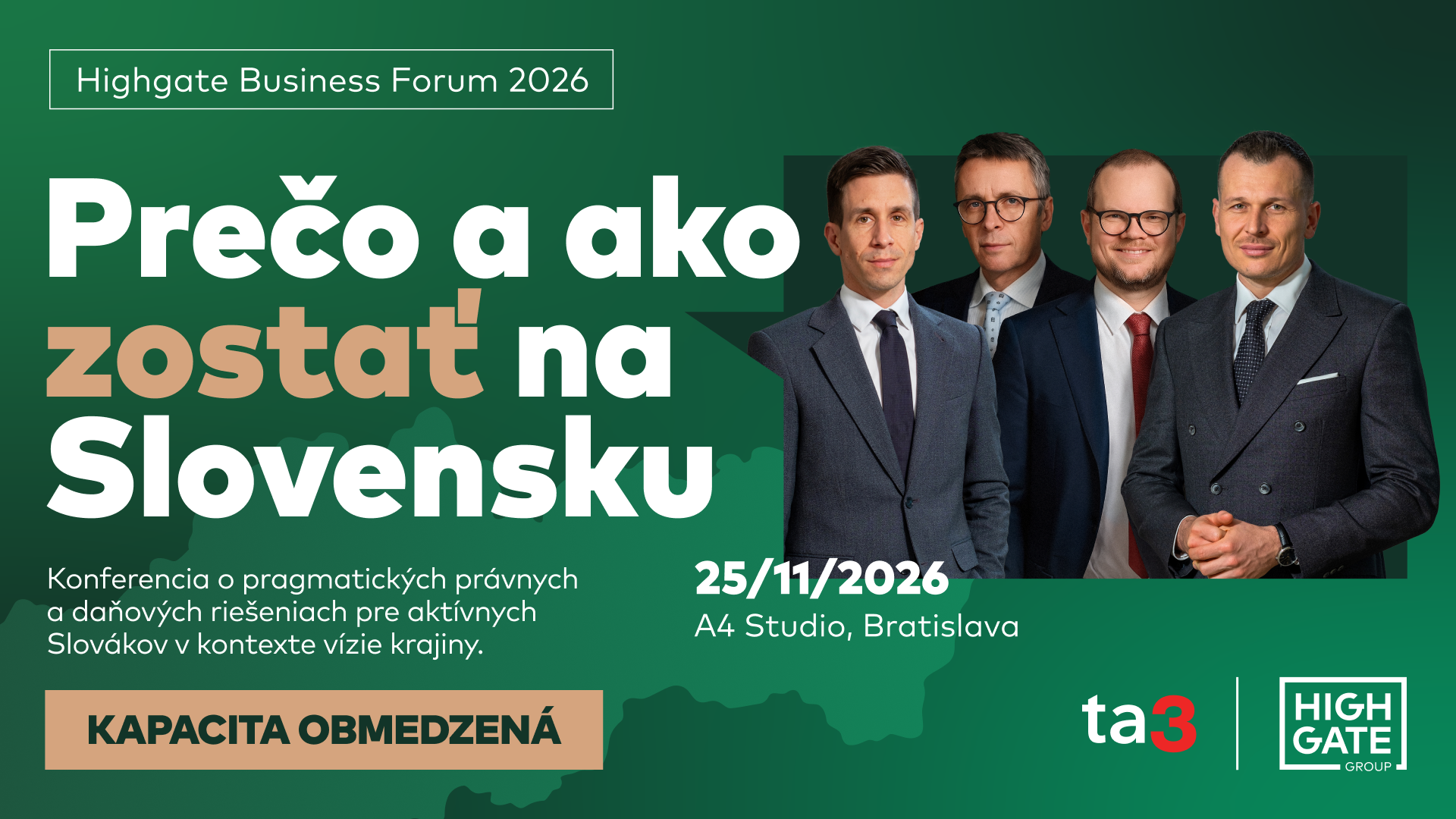
That is one of the reasons why we want to take a pragmatic look at business and investment opportunities in Slovakia at our conference “Why and How to Stay in Slovakia?”, which will take place on November 25, 2026. Among other things, we will discuss the conditions Slovakia currently offers to entrepreneurs and investors and, conversely, where it makes sense to consider foreign solutions.

When raising capital, therefore, the decisive factor need not be solely where regulation is simplest or the tax burden is lowest. A well-designed structure must function as a whole—legally, regulatorily, fiscally, and commercially.
At Highgate Group, we have long been dedicated to capital markets law and the structuring of investment vehicles. We assist clients with establishing funds, securities offerings, crowdfunding, and other forms of capital raising, evaluating these not only from a legal perspective but also from a tax and practical standpoint.
We are Highgate Group, modern advisors for your legal, tax, and accounting needs—all under one roof.
You can find more information on capital markets law on our website in this section:
If you’re interested, you can subscribe to our newsletter for interesting practical legal and tax information.
You can address your specific questions during a consultation with our partner, Peter Varga, who also specializes in capital markets law and tax structuring. You can schedule a consultation here.