
Many entrepreneurs set up multiple companies in order to remain below the threshold for mandatory VAT registration or to take advantage of the 10% corporate income tax rate. At first glance, this may seem like a simple and legal form of tax optimization. In reality, however, such a structure may constitute an abuse of the law and lead to significant tax and criminal liability risks. Where is the line between legitimate business and circumventing the law?
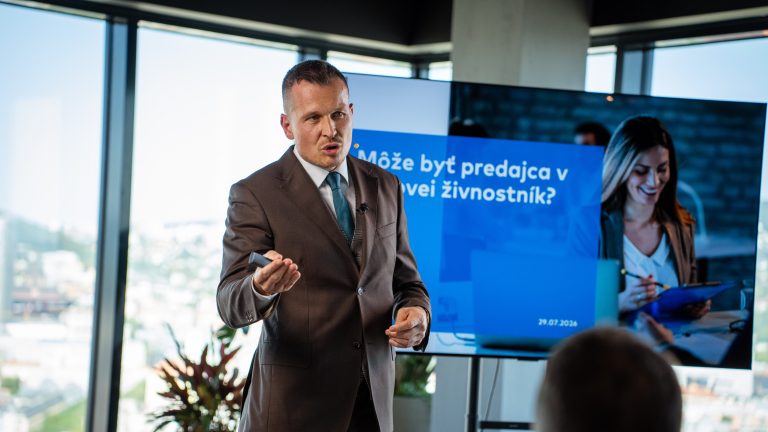
The division of business operations among multiple companies is one of the issues we regularly encounter at Highgate Group. Many entrepreneurs operate under the assumption that, as long as the law does not explicitly prohibit owning multiple companies, such a structure cannot be problematic. The reality, however, is significantly more complex. Peter Varga and Tomáš Demo also discussed this topic in more detail in Episode #45 of the Highgate Talks podcast, where they used practical examples to explain where the line is drawn between a legal business structure and the abuse of the law.
The main motivation is usually financial. If a business owner exceeds the legal threshold for VAT registration, operating the business can become significantly more expensive, especially if the business provides services or sells goods to end consumers (B2C).
Typical examples include online services, fitness centers, beauty salons, and various services provided to individuals. If a business owner becomes a VAT payer, their profit margin decreases significantly even if prices remain unchanged. At the same time, once their income exceeds a certain threshold, they may also be subject to a higher income tax rate.
Some business owners therefore set up two, three, or even more companies instead of just one, with each reporting a lower turnover. The goal is to remain below the threshold for VAT registration.
However, it is precisely this motive that poses the greatest risk.
Our experience shows that recurring structures tend to be very similar.
The first scenario is when a single entrepreneur owns multiple companies that engage in virtually the same business activities. They often share the same address, have the same managing director, or serve the same clients.
The second model involves regularly switching between companies. Once the entrepreneur reaches a certain level of revenue, he or she begins invoicing through a different company and repeats this process.
A third common scenario involves a combination of one company registered for VAT and another that is not, with clients being allocated between them depending on whether it is more advantageous to invoice with or without VAT.
The mere existence of multiple companies does not, in itself, constitute a violation of the law. What matters are the reasons for their existence and the actual economic substance of the entire structure.
An entrepreneur may own multiple companies. These companies may operate in the same industry, have the same managing director, or be located at the same address.
However, this does not automatically mean that every such configuration is risk-free.
The line between legal tax optimization and abuse of the law is currently one of the most hotly debated topics in business practice. That is why we are dedicating a separate session to it at our conference“Why and How to Stay in Slovakia?”, where, using specific examples, we will explain how the tax authorities assess business operations conducted through multiple companies, what risks the new VAT rules have introduced, and how to structure a business so that it remains legally and fiscally defensible in the long term.
Tax law does not operate solely on the basis of the literal wording of the statutes. The principle of the prohibition against the abuse of rights also plays a significant role.
This refers to a situation in which a business owner formally complies with the individual provisions of the law, but the structure created serves a single purpose—to avoid obligations that would otherwise arise.
It is precisely this principle that has been gaining increasing prominence in the decision-making practices of both courts and tax authorities in recent years.
Starting in 2026, a new mechanism known as “ex officio group VAT registration” has been introduced, through which the tax authority can combine several affiliated companies into a single group for VAT registration purposes.
However, that may not be the only risk.
In certain situations, the tax authority may retroactively conclude that a business owner should have been registered for VAT in the past. This may result in:
The decisive factor here is usually an individual assessment of the specific structure, its economic rationale, and the reasons for which it was created.
In practice, there is no simple rule that allows one to say that a particular structure is automatically legal or illegal.
It’s the details that matter. What was the economic rationale behind the division of the business? Are the companies truly independent? Do they have their own resources, clients, employees, and business purpose, or is this merely a formal division of revenue?
It is precisely these issues that the tax authority is examining with increasing rigor today.
At Highgate Group, we have long been dedicated to setting up business structures, tax optimization, and representing clients during tax audits. Our goal is not to seek aggressive solutions that push the boundaries of the law, but to design structures that are legally sound, economically viable, and defensible in the long term.
Peter Varga and Tomáš Demo discussed this issue in greater detail on the Highgate Talks podcast. They analyze not only practical examples from business practice but also the new rules for VAT group registration, the principle of abuse of rights, and the potential tax or criminal consequences of an improperly structured business setup.
Would you like to know how to run a business in Slovakia effectively and safely?
We will also address this topic in detail at our conference,“Why and How to Stay in Slovakia?”, where we will present practical solutions in the areas of taxation, law, and business structures. We’ll show you how to structure your business so that it’s sustainable in the long term and, at the same time, resilient to increasing government scrutiny.

We are the Highgate Group, modern advisors for your law, tax and accounting under one roof.
If you are interested in this topic, please do not hesitate to contact us:
For more information on property and business protection, visit this section of our website: Property and Business Protection
If you are interested, you can subscribe to our newsletter for interesting practical legal and tax information.
You can address your specific questions in a consultation with our partner Peter Varga, who specializes in financial regulation and tax law. You can book a consultation here: