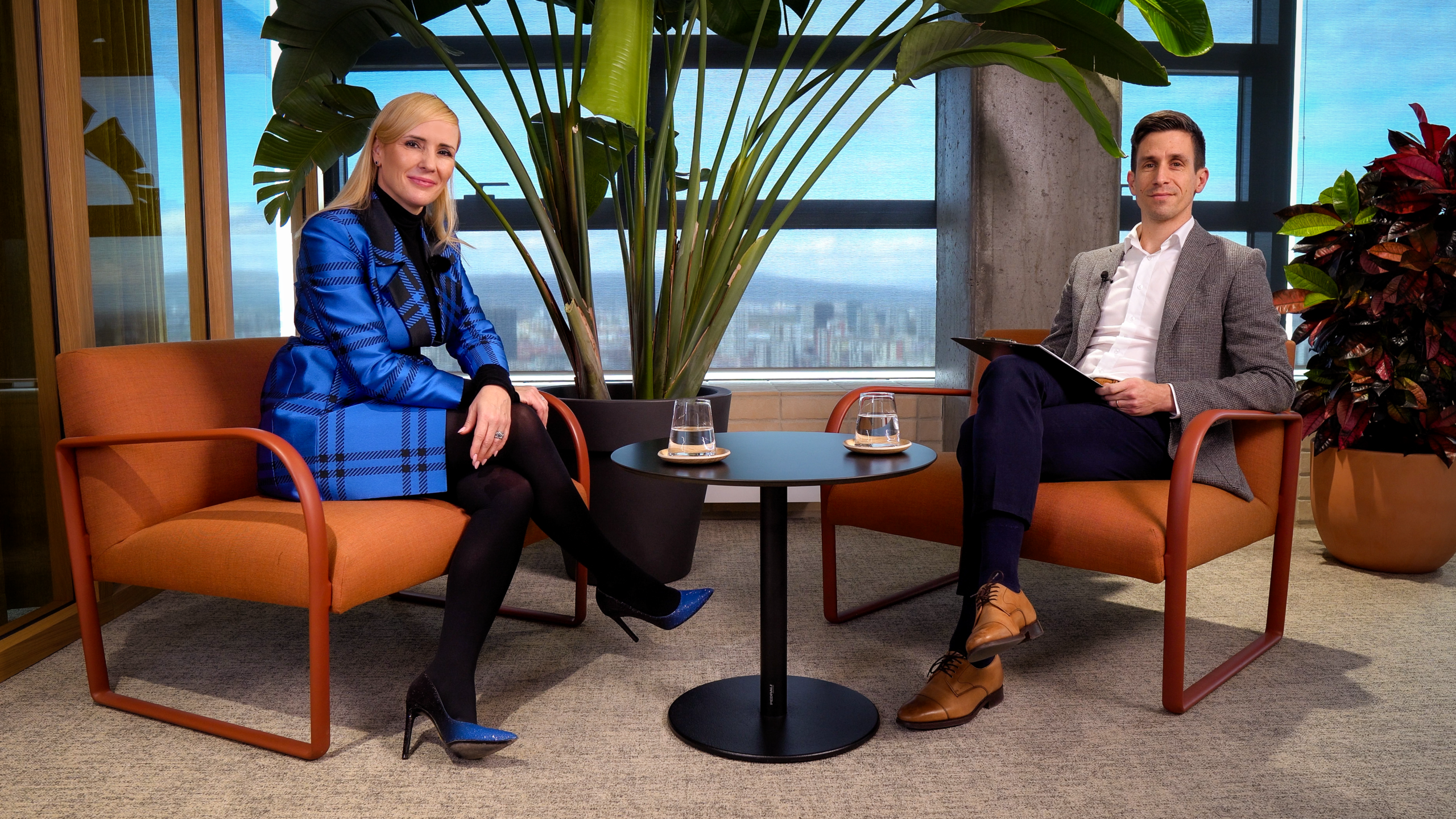
Slovakia has a lot of smart people, but fewer and fewer reasons why they would want to do business here. Tatiana Ondrejková, founder of Pelikan, serial entrepreneur and investor, explains why the entrepreneurial environment in Slovakia is deteriorating, what drives away investors and talent and where she sees the line beyond which it will no longer be possible to run a business in Slovakia.
According to Ondrejkova, the Slovak business environment has been deteriorating in recent years. While some changes have brought better opportunities, such as digitalisation and easier scalability of business, these changes have occurred not thanks to the state, but in spite of it.
Ondrejková considers the biggest problem to be the transaction tax, which she describes as a “killer” of the motivation of successful people to stay at home. Countries that understand that their future depends on these people are doing everything they can to attract them, she says. Slovakia, however, is doing the opposite. Entrepreneurs create jobs, pay taxes and fill the budget from which the state can build infrastructure. Yet Slovakia tends to discourage these successful people.
According to Ondrejkova, the weak and unpredictable environment drives away foreign capital. Investors, who only a few years ago invested venture capital in Slovak companies, today more and more often insist that their target companies should be based outside Slovakia.
From the point of view of domestic investors who know the local environment, it still makes sense. But it’s more a question of habit, not logic. Slovakia needs foreign investors who would bring foreign capital and investment to develop local companies with global ambitions.
The deteriorating legislative environment, high tax burden and low quality of public services only increase the frustration of entrepreneurs. Many would be willing to pay higher taxes if they saw their money being used efficiently and business conditions improving.
Ondrejková claims that Pelikán is staying in Slovakia also because he is still able to operate relatively freely here. However, if increasing restrictions make it impossible to compete with foreign players, leaving would be inevitable.
It is already partly doing business abroad, not for tax reasons, but for easier expansion and access to local markets. Slovakia, according to her, can be a good place to test a business model, but not a market where it is possible to grow in the long term.
As an investor, Ondrejková tries to diversify, part of her portfolio is in risky startups, part in real estate or stable stocks. She considers venture capital as an engine of innovation, which would be more important in Slovakia if it had the support of systemic measures. According to her, entrepreneurship and investing are not only about profit, but also about responsibility, about how to return the capital back to the economy that allowed it to be created.
If Ondrejková were twenty years old again today, she would start her own business, perhaps in another industry, but also in Slovakia. She sees that the country can be a good laboratory for testing products and services. The problem is that many entrepreneurs remain “stuck” here and cannot see beyond the small market.
For the new generation of entrepreneurs it is therefore crucial to think globally from the beginning, to use Slovakia as a launching pad, but to consider expansion as a compulsory journey.
If Ondrejková were twenty years old again today, she would start her own business, perhaps in another industry, but also in Slovakia. She sees that the country can be a good laboratory for testing products and services. The problem is that many entrepreneurs remain “stuck” here and cannot see beyond the small market.
For the new generation of entrepreneurs it is therefore crucial to think globally from the beginning, to use Slovakia as a launching pad, but to consider expansion as a compulsory journey.
We are the Highgate Group – modern advisors for your law, tax and accounting under one roof.
Subscribe to our newsletter and don’t miss out on more insights from the business environment.
If you are interested in this topic, please do not hesitate to contact us:
For more on M&A and private equity, please visit this section of our website: venture capital and M&A
If you are interested, you can also subscribe to our newsletter about interesting practical legal and tax information free of charge: Subscribe to newsletter.
Alternatively, you can address your specific questions in a consultation with our partner Tomáš Dem, who also specialises in this area. You can book a consultation here: