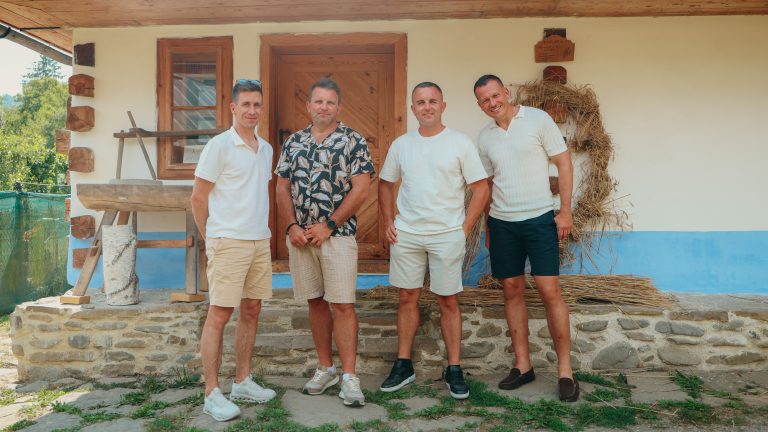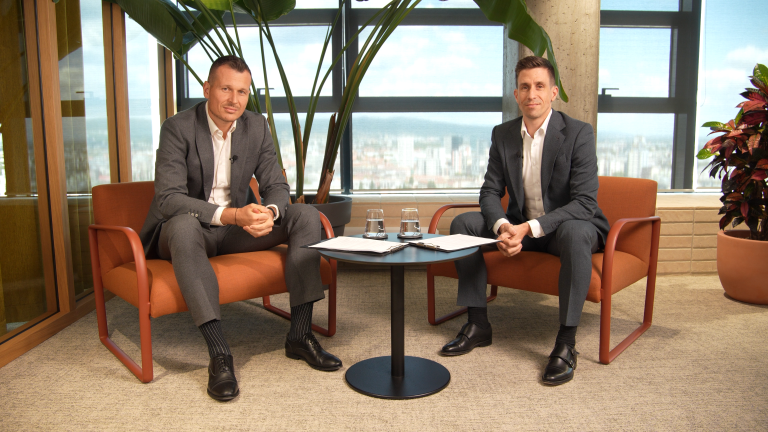
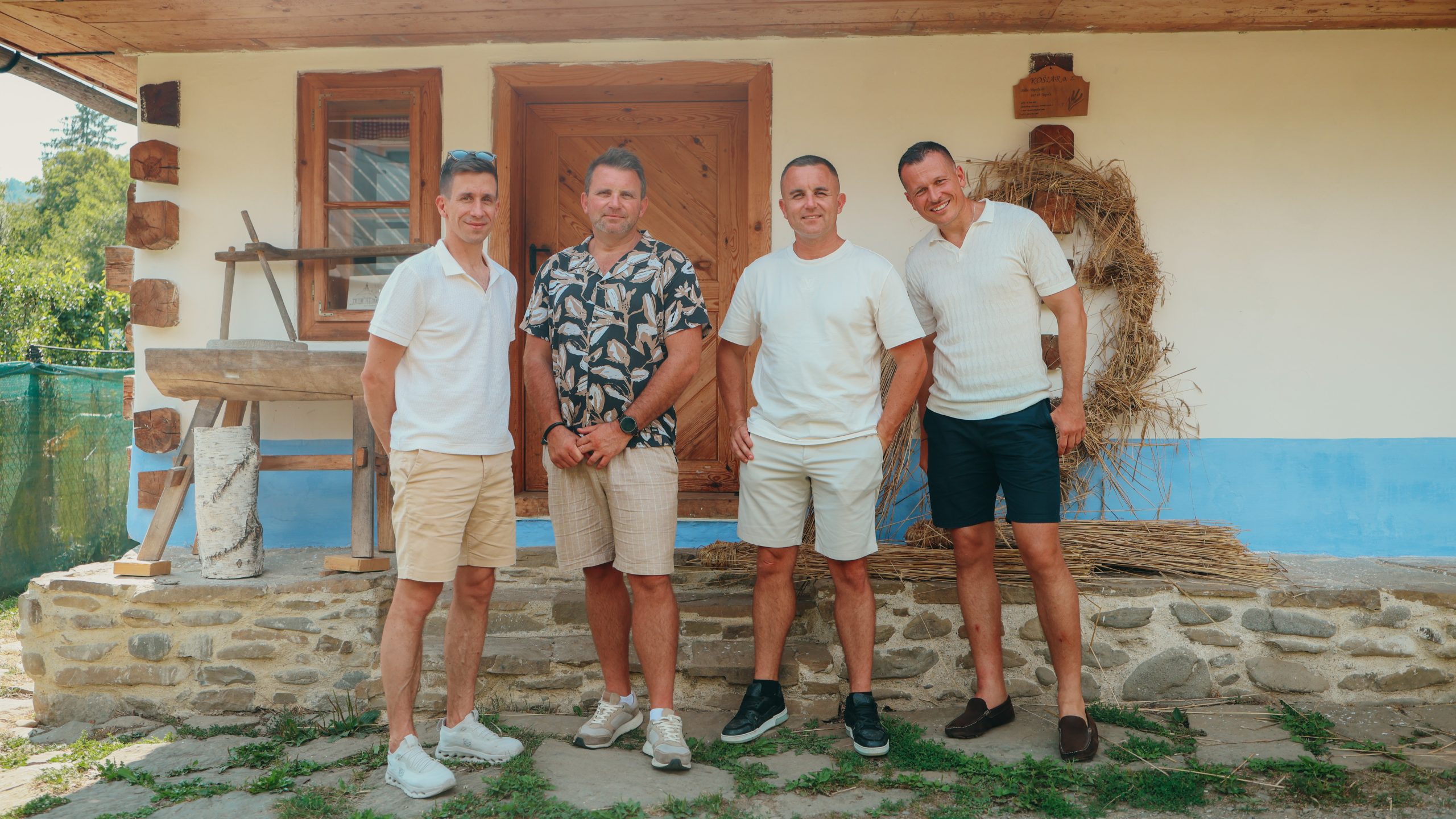
Is expanding abroad the natural next step for a successful Slovak company? The story of Gardeon shows a different path. Founded in Turiec, the company now operates in several European markets, and its revenue is approaching 20 million euros. However, the company’s headquarters remain in Slovakia. We spoke with Martin and Marek Cholevovci on the Highgate Talks #54 podcast about international expansion, employee motivation, the holding company structure, and protecting the company’s assets .
Gardeon started out as a company that sold garages. Today, it not only sells them but also manufactures them, handles its own logistics and installation, and is expanding from Slovakia into foreign markets.
Yet the company’s story isn’t rooted in Bratislava or a major international business hub. Gardeon grew up in Turčiansky Ďur. It was there that the company established its foundation and found the people on whom it could build its future growth.
According to the founders, the group generated revenue of approximately 15 to 16 million euros last year, and given the volume of orders received, they expect the company to have a turnover of around 20 million euros in the near future.
Gardeon’s story is therefore interesting even in a broader context. It shows that expanding abroad does not necessarily mean leaving Slovakia.You can listen to the entire podcast with Martin and Marek Cholebovci here:
As it expanded, Gardeon ran into a problem that may be all too familiar to Slovak entrepreneurs. It’s not enough to have a high-quality product and translate your website into a foreign language.
Upon entering the German market, the company found that customers were unwilling to make larger advance payments to a foreign company. To build trust, it was therefore necessary to establish local entities.
However, this brings with it another layer of business complexity. In every country, you have to deal with banking, accounting, taxes, legal advice, and local regulations. Gardeon went through this process when expanding into several countries.
An interesting insight from their experience is that doing business abroad may not be any easier from an administrative standpoint than in Slovakia. For example, according to the founders, the process of registering for VAT in Germany took about half a year. Costs for legal services, marketing, office space, and labor are also higher there.
Therefore, expanding into foreign markets is not necessarily the easier or cheaper option. When deciding whether to expand, it is important to consider not only the size of the market or the tax rate, but also the entire economic, legal, and operational context.
The gradual expansion into foreign markets naturally raised the question of how to structure the entire group.
Gardeon therefore gradually established a structure consisting of local companies in individual markets. The parent company, however, remained in Slovakia.
Such a decision may not be solely a matter of taxes. When doing business across borders, it is important to consider customer trust, banking relationships, local regulations, employment, accounting, VAT, legal risks, and the day-to-day operations of individual companies.
At Highgate Group, we have long been dedicated to designing business and holding structures. For growing companies, we do not view a holding company merely as an ownership structure. A properly designed structure can address expansion, asset protection, investments, succession planning, and the segregation of individual business risks.
Gardeon is a practical example of this kind of evolution. As the company grew, it acquired more real estate and other assets. However, these assets remained exposed to the risks inherent in doing business.
The solution was to separate the operational business from the part of the structure that holds the developed assets. As the founders of Gardeon explain in the podcast, this approach made it possible to better separate what the company had built up over the years from day-to-day business risks.
However, a corporate structure alone won’t build a company. As it grew, Gardeon also relied on a specific compensation system.
The company tried both annual and quarterly incentive models. Gradually, however, it developed a system in which employees share in the company’s success based on results achieved during a specific period.
The logic is simple. If a company has more orders during the season, employees in production, warehousing, assembly, or sales have more work. Increased company activity can therefore translate into higher pay for them.
This allows employees to see a more direct link between the company’s results, their own performance, and their compensation.
This experience is particularly interesting at a time when companies are increasingly grappling with a shortage of qualified talent. According to its founders, Gardeon managed to receive approximately 30 resumes by the next day during one of its recruitment drives. They attribute this in part to the way the company treats its employees and structures their compensation.
At Highgate Group, too, when designing compensation systems, we find that a fixed salary alone may not be the only solution. With the appropriate legal and tax framework in place, it is possible to utilize performance-based bonuses, profit-sharing, employee benefit programs, or more sophisticated incentive schemes.
One of the main themes of the interview is the distinction between two decisions: where to establish a business and in which markets to operate.
Gardeon shows that these two answers do not have to be the same.
A company can have its business hub in Slovakia, utilize Slovak employees, know-how, and infrastructure, and at the same time sell to customers abroad through local companies.
The Internet, logistics, and the European Single Market have significantly reduced the importance of whether a company is established in Bratislava, Turiec, or a small village. For a growing business, it is more important to get its structure, processes, people, and expansion right.
Of course, the Slovak business environment also has its problems. In the interview, Gardeon points out, for example, the lengthy construction permitting process, which is a practical obstacle for a company operating in the construction sector.
However, even doing business abroad is not without its administrative burdens, higher costs, and local peculiarities.
This is precisely the dilemma we will be addressing at our conference “Why and How to Stay in Slovakia?”, where we’ll examine the possibilities for effective business operations from Slovakia from a practical legal, tax, and business perspective.

Gardeon’s story is not an argument that every company should remain in Slovakia under all circumstances. However, it is a practical example of how expanding abroad does not necessarily mean relocating the entire business across the border.
With the right approach, a Slovak company can establish foreign subsidiaries, protect the assets it has built up, motivate key personnel, and gradually develop a group with an international presence.
And at Highgate Group, we help entrepreneurs set up precisely these kinds of structures from a legal, tax, and accounting perspective.
We are the Highgate Group, modern advisors for your law, tax and accounting under one roof.
If you are interested in this topic, please do not hesitate to contact us:
For more information on property and business protection, visit this section of our website: Property and Business Protection
If you’re interested, you can subscribe to our newsletter featuring interesting and practical legal and tax information.
You can address your specific questions during a consultation with our partner, Peter Varga, who specializes in financial regulation and tax law. You can schedule a consultation here: