Is it worth it for Slovak entrepreneurs to stay at home, or is it more advantageous to move their businesses to the Czech Republic, Dubai, or Estonia? Despite its growing tax and social security burden, Slovakia still has several competitive advantages. Peter Varga, a tax attorney and partner at Highgate Group, discussed when moving abroad makes economic sense, what risks entrepreneurs tend to underestimate, and how to do business more effectively in Slovakia on the show “Ekonomika+” on TA3.
The debate over entrepreneurs leaving Slovakia is often reduced to a comparison of tax rates. If taxes are lower somewhere, the business environment is automatically considered more favorable. In practice, however, the decision-making process is significantly more complex.
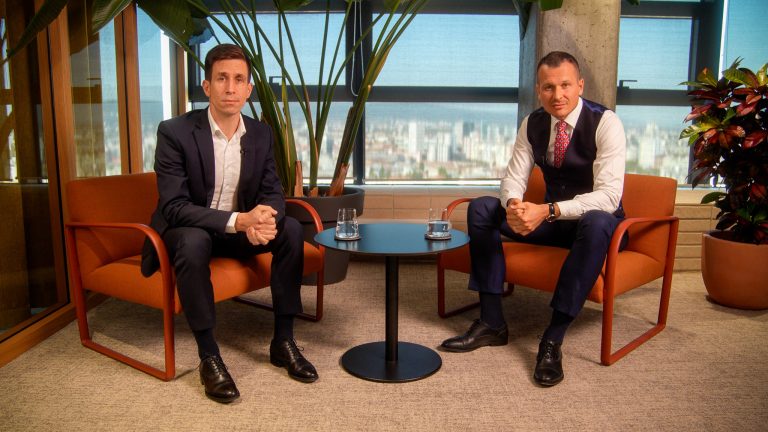
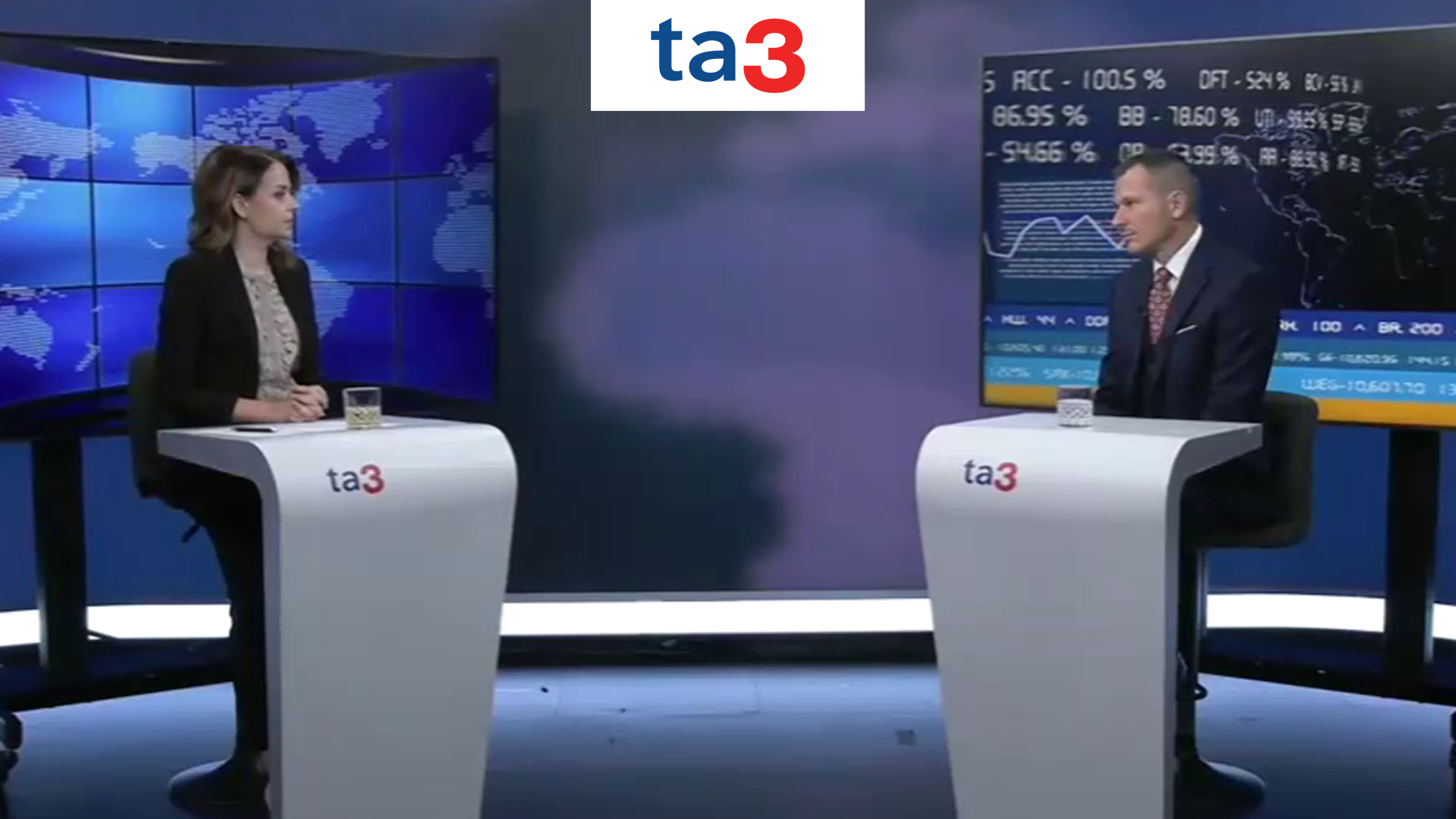
Our partner Peter Varga addressed this very issue in an interview with TA3 television. On the program “Ekonomika+,” he compared the business environment in Slovakia with selected foreign jurisdictions and explained why moving a business abroad may not always be more advantageous, either economically or legally.
At Highgate Group, when dealing with cross-border structures for Slovak entrepreneurs, we regularly find that the attractiveness of a particular country must be assessed based on a comprehensive set of legal, tax, regulatory, and practical factors. Some of the disadvantages of operating abroad only become apparent once a business owner actually begins operating there.
Dubai has become one of the symbols of the shift of business operations abroad. Entrepreneurs whose activities are not physically tied to Slovakia, in particular, see it as an alternative to the domestic business environment.
However, as Peter Varga pointed out in an interview with TA3, every foreign jurisdiction also has its drawbacks, which entrepreneurs often don’t realize until after they’ve moved to that country.
Spain, for example, is a popular destination among Slovak investors for purchasing real estate. However, in addition to the price of the property itself, one must also factor in local taxes and fees associated with its acquisition or transfer. In certain cases, gift tax may also apply.
Similarly, even the Czech Republic—which is close both economically and geographically—may not necessarily be simpler in every respect.
Establishing a limited liability company in the Czech Republic can be more time-consuming and costly than in Slovakia. For more complex corporate transactions—such as a corporate split, spin-off, or the implementation of employee stock ownership plans—the Czech legal environment can be more complicated.
The tax rate alone is therefore not a sufficient criterion for deciding whether to relocate a business.
An entrepreneur should always assess the total costs, administrative burden, regulatory requirements, and the practical operation of the business in a specific country.
On the show “Ekonomika+,” our partner Peter Varga explains what competitive advantages Slovakia has, when it makes sense to relocate a business abroad, and how entrepreneurs can structure their businesses more effectively.
You can find the full interview here.
Despite the negative sentiment in the business community, Slovakia has several features that may be attractive to entrepreneurs and investors.
One of them is the relatively favorable taxation of dividends. In an interview, Peter Varga pointed out the 7% dividend tax rate under the relevant regime, which is advantageous compared to several neighboring countries. For example, in Austria, a 27.5% tax rate applies to income from capital assets.
When assessing dividends, however, it is necessary to take into account the specific year from which the profit originates, the recipient’s tax residency, and other legal conditions. This is because there is no uniform tax rate for all dividends in Slovakia.
Another advantage of Slovakia is the absence of certain taxes that are common in other countries. For example, the Slovak legal system does not recognize a separate inheritance tax or gift tax.
Another advantage may be the relatively simpler legal environment for certain business operations. Slovakia has a smaller business ecosystem, which in certain situations means less complexity and lower transaction costs.
Peter Varga also pointed out differences in the intensity of enforcement across countries. In Slovakia, inspection and sanction practices may be less rigorous in some areas than in other countries.
However, this should not be confused with legal certainty or a recommendation to disregard legal obligations. When making business decisions, one must consider not only the wording of legal regulations but also how they are applied in practice.
When deciding whether to relocate a business abroad, one of the most important factors is the nature of the business itself.
The owner of a manufacturing company with a factory, employees, and operational infrastructure in Slovakia naturally has less flexibility than an entrepreneur providing digital services or an investor managing financial assets.
The less a business is geographically tied to Slovakia, the more room there is to consider foreign alternatives.
However, in some business models, the relocation may not be motivated solely by tax considerations.
As Peter Varga explained to TA3, there are areas where the Slovak legal and regulatory environment does not provide a sufficiently competitive infrastructure. These include, for example, certain investment and fund structures for which a foreign jurisdiction may offer more favorable legal or regulatory conditions.
A distinct group consists of investors who may not be considering relocating their business but rather changing the way they hold and tax their investments.
When investing in stocks, real estate, or other assets, it can be crucial whether the investment is made by an individual, a Slovak company, or a foreign legal entity.
At Highgate Group, we focus intensively on precisely these issues. When designing cross-border structures, we assess not only potential tax benefits but also tax residency, the company’s actual place of management, the economic substance of the foreign structure, and related legal risks.
However, the situation for early-stage entrepreneurs is also worth noting.
According to Peter Varga, it may be more rational for most Slovak startups in the early stages of their business to remain in Slovakia. Establishing a company here is relatively simple, and a foreign structure could, in the initial phase, entail more costs and complications than actual benefits.
The exception is business models that require a specific foreign legal or regulatory environment from the very beginning.
Entrepreneurs’ decisions don’t have to come down to just two options—staying in Slovakia or moving abroad.
There is also a third way: to structure your business, investments, and asset protection in Slovakia more effectively within the existing legal framework.
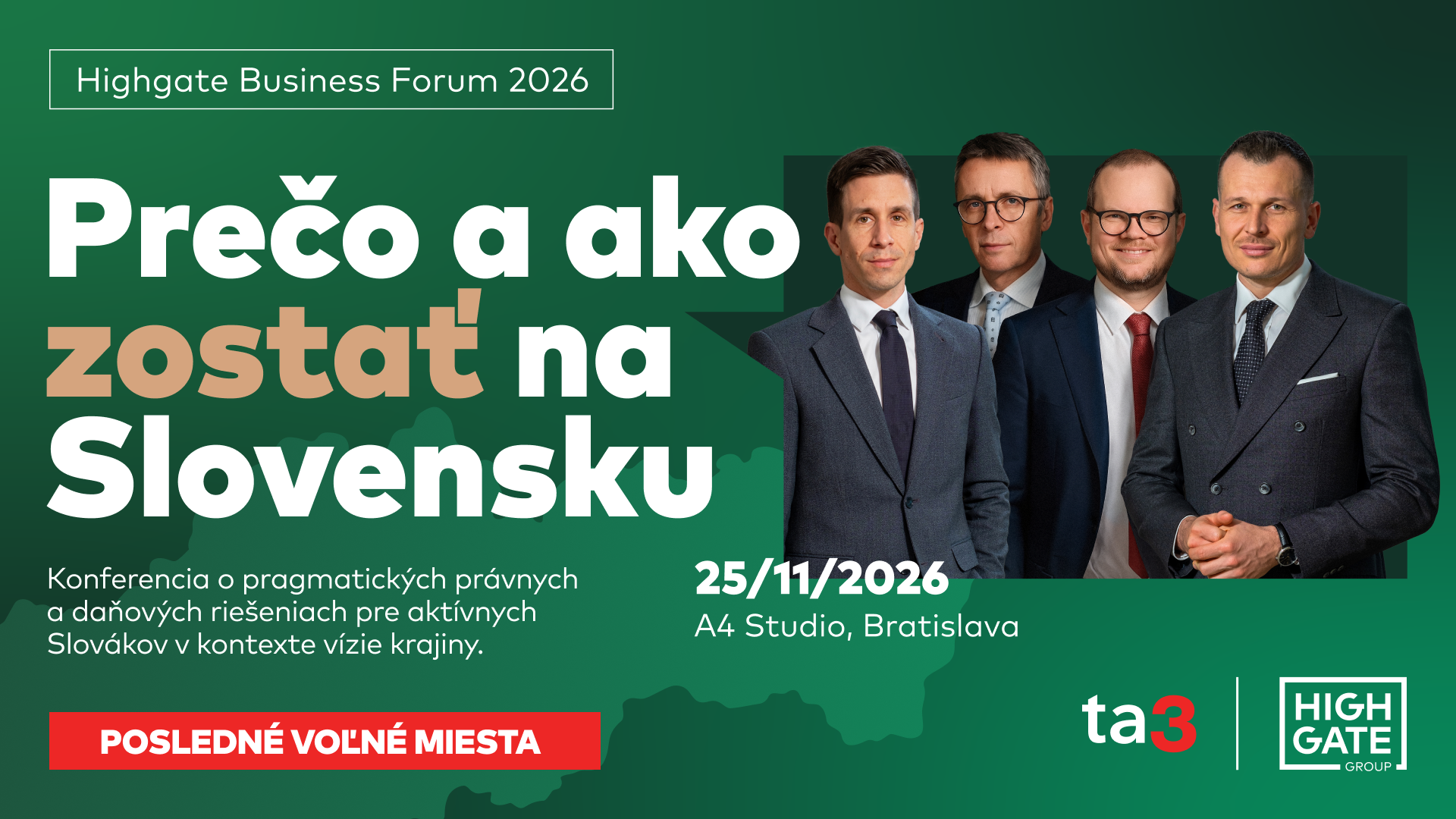
This is precisely the topic that the Highgate Group conference will address “Why and How to Stay in Slovakia?”, which will take place on November 25, 2026, at A4 Studio in Bratislava.
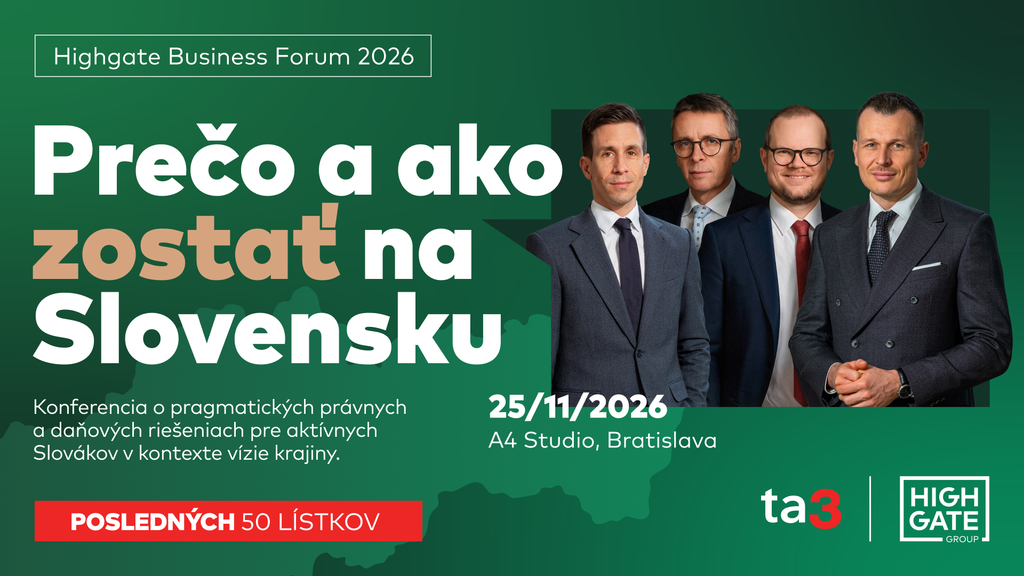
The conference will offer practical solutions to issues that Slovak entrepreneurs regularly face.
Topics will include, for example, the effective withdrawal of funds from one’s own company, the use of company cars for private purposes, establishing partnerships with self-employed individuals and the risks of the “Švarc system,” asset protection, and the use of domestic and foreign business structures.
Another separate topic will be the line between legal tax optimization and actions that may have criminal consequences.
This line is particularly important for entrepreneurs. Incorrectly structured tax optimization may not only lead to additional tax assessments and penalties but, under certain circumstances, also to criminal liability.
The goal of the conference, therefore, is not to convince entrepreneurs that they should not leave Slovakia. On the contrary, we want to show them what options are available to them under the current legal and tax environment and how to structure their businesses, investments, and assets in an effective and legally secure manner.
For more information on tax and contribution optimization and asset protection, please visit the following sections on our website: Tax and Contribution Optimization, Asset and Business Protection
If you’re interested, you can subscribe to our newsletter featuring interesting and practical legal and tax information.
You can address your specific questions during a consultation with our partner Peter Varga, who specializes in financial regulation and tax law. You can schedule a consultation here.