Trusts and endowments are becoming increasingly popular tools for asset protection among Slovak entrepreneurs. They allow for the separation of asset ownership from the original owner, the establishment of inheritance rules, and the assurance of continuity in family businesses. However, they are not a one-size-fits-all solution. An improperly structured arrangement can lead to complications in asset management, high costs, or even an excessive tax burden. So when is it worthwhile to establish a Czech foundation or trust, and when is it better to seek a solution in another country?
Asset protection is becoming one of the key concerns for Slovak entrepreneurs, particularly owners of family-owned businesses. This is due not only to the risks of doing business or concerns about creditors, but also to issues of succession, inheritance, and the long-term preservation of family wealth.
This is precisely why there is growing interest in trusts and endowments, which allow assets to be separated from their original owner and establish rules for their management that extend to future generations.
Although these structures are often presented as a universal tool for asset protection, their use also entails significant legal, tax, and practical limitations.
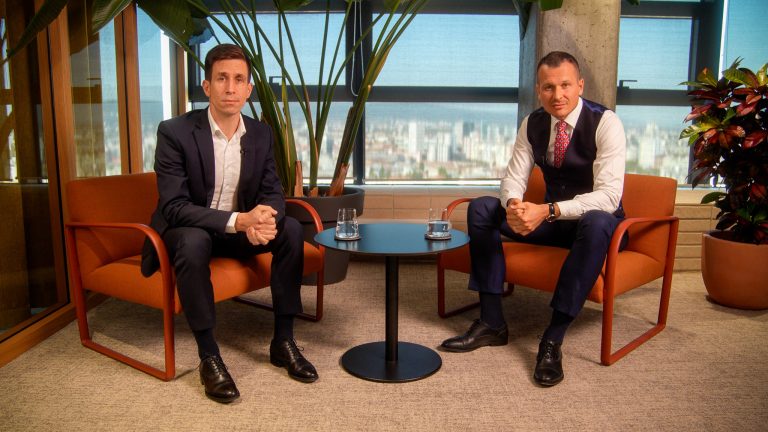
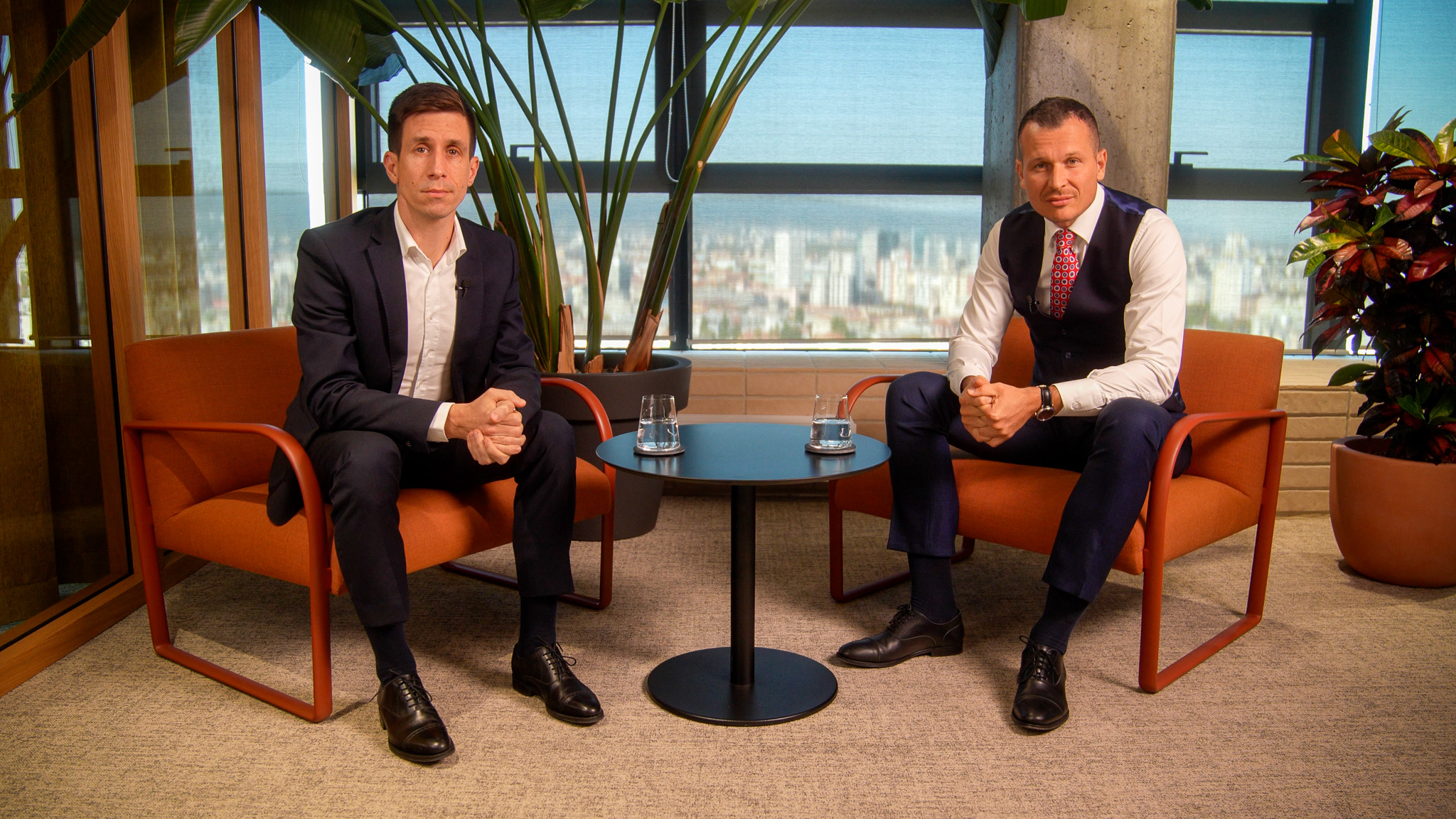
In the 58th episode of the Highgate Talks podcast, Peter Varga and Tomáš Demo discuss how these structures work, why Slovak entrepreneurs primarily use Czech solutions, and what risks they might overlook when setting them up.
A trust fund can be simply thought of as a safe into which the settlor places their assets and establishes rules for their management and use.
The assets may include, for example, ownership interests in a family business, real estate, securities, or other investments. The founder also specifies who may benefit from the assets and under what conditions.
The trust fund itself has no legal personality. It consists of assets set aside for a specific purpose, which are managed by a trustee in accordance with the rules set forth in the fund’s charter.
Unlike a trust fund, an endowment fund is a separate legal entity that owns assets in its own name. However, it has neither partners nor shareholders, as is the case with business corporations.
It is managed by a board of directors, whose members may include family members, professional trustees, or independent individuals.
Both mechanisms allow for the establishment of rules governing the management of assets so that their administration is not dependent solely on the decisions of the original owner.
This is particularly important in family businesses, where the goal may be to prevent the fragmentation of ownership among heirs, ensure business continuity, or establish rules for distributing profits to individual family members.
Protecting assets, therefore, does not merely mean protecting them from creditors. It also involves protecting them from uncontrolled division, family conflicts, and risks associated with generational succession.
The Slovak legal system does not yet offer a full-fledged equivalent of a Czech private foundation or trust fund that would allow private family assets to be managed and protected in the same way.
However, the situation is beginning to change. The National Council of the Slovak Republic has approved a new Civil Code, effective July 1, 2027, which introduces the concept of a private fund into Slovak law for the first time. The Civil Code itself, however, provides only a general framework for this institution. The details regarding its establishment, management, and operation are to be regulated by a separate law, which has not yet been adopted. Until that happens, private funds cannot be used in practice. In the future, however, it is reasonable to expect that a comparable alternative will also become available in Slovakia.
Although a registry of trust funds already exists in Slovakia, its primary purpose is to keep track of relevant foreign structures. The mere existence of the registry does not mean that Slovak law allows for the establishment of domestic trust funds based on the Czech model.
For Slovak entrepreneurs, therefore, the Czech Republic remains one of the most accessible alternatives for the time being.
However, even Czech solutions are not equivalent from a practical standpoint.
In the case of a trust fund, it can be problematic to register assets located in Slovakia in the relevant registries. These include, for example, real estate registered in the land registry, ownership interests in Slovak companies, or securities.
Since a trust does not have legal personality, Slovak registries may have difficulty identifying the entity to which the assets are to be transferred.
This is precisely why a Czech foundation may be a more practical solution for a Slovak entrepreneur.
As a separate legal entity, it is easier to identify for the real estate cadastre, the commercial register, the central securities depository, and banks.
However, this does not automatically mean that a Czech foundation is suitable for every entrepreneur.
Establishing a foundation represents a fundamental change in the ownership structure. The original owner transfers the assets to a separate entity, and their continued influence over the management of those assets depends on the specific rules established.
For entrepreneurs who are accustomed to making decisions about their assets directly, the loss of direct ownership can be a significant psychological and practical obstacle.
One of the most significant issues facing foreign foundation and trust funds is their tax treatment in Slovakia.
According to experts at the Highgate Group, the Slovak Financial Administration currently takes an exceptionally strict approach to taxing certain distributions from foreign fund structures.
The problem arises primarily when funds are distributed to individuals who benefit from the fund, i.e., beneficiaries.
Let’s imagine an entrepreneur who transfers ownership interests in his companies to a foreign foundation. The companies then generate profits, which flow through the holding structure to the foundation and are subsequently distributed to family members.
From an economic perspective, this may constitute a distribution of business profits.
While a direct dividend payment to an individual may be subject to, for example, a 7% withholding tax if certain conditions are met, a payment from a foreign fund may result in a significantly higher tax and contribution burden, depending on the tax authority’s approach.
In certain situations, the total tax burden may thus be approximately 45%.
The treatment of the return of the originally invested assets may be even more problematic.
If a founder contributes a certain amount of capital to a fund and that capital is later distributed to a beneficiary, the question arises as to whether such a distribution should be subject to taxation at all, and if so, how.
From the perspective of experts at Highgate Group, it is necessary to distinguish the economic substance of individual payments. We therefore consider the tax authority’s approach—which can lead to high taxation even when the originally contributed capital is returned—to be problematic.
However, the specific tax implications always depend on the type of fund, the legal nature of the distribution, the recipient’s tax residency, and other circumstances.
An improperly structured fund may thus ensure asset protection, but at the same time significantly complicate its tax-efficient use.
That is precisely why, at Highgate Group, we integrate legal, tax, and accounting advice when designing offshore asset structures.
It’s not enough to simply set up the fund itself. It’s equally important to establish the process for contributing assets, managing them, distributing returns, and potentially returning capital, so that the entire structure functions reliably and predictably over the long term.
The Czech Republic is a natural choice for Slovak entrepreneurs, primarily due to its geographical proximity, similar legal environment, and relatively affordable costs.
However, this may not always be the most suitable jurisdiction.
For larger estates, Liechtenstein, Malta, or traditional trust jurisdictions such as Jersey or Guernsey may be relevant alternatives.
Liechtenstein has nearly a century of tradition in the management of private assets and trust structures. Its advantages include a well-developed legal infrastructure, established case law, and long-term experience with similar mechanisms.
However, greater predictability generally also means higher costs.
Estimated costs discussed in the podcast:
| Structure Type | Establishment | Annual Report |
| A Simple Czech Fund Structure | Thousands of euros | Based on the scope of the report |
| Customized Czech structure | In the low tens of thousands of euros | Thousands of euros |
| A Sophisticated Overseas Structure | Generally, significantly higher costs | Can amount to tens of thousands of euros |
These are approximate figures from the discussion, not a universal price list. The final price depends on the jurisdiction, the volume and type of assets, the complexity of the structure, and the desired scope of management.
Therefore, when making a decision, it is not advisable to compare only the cost of establishing the fund.
It is also essential to consider the legal and tax risks associated with a specific jurisdiction, the extent of control the founder retains over the assets, and whether the structure is practically suitable for the founder’s business and family needs.
At the same time, it is important to note that trust and foundation funds are not suitable solutions for the purpose of transferring assets away from creditors.
If a company is already facing claims from creditors, the transfer of assets to a fund may be legally contestable. Depending on the circumstances, such action may also have criminal law consequences.
Fund structures are also not intended primarily to anonymize assets or evade tax obligations. In the case of purpose-built structures, the application of anti-abuse rules may also come into play.
Asset protection must therefore be addressed proactively, not only when an entrepreneur faces foreclosure, bankruptcy, or a tax audit.
In some cases, a properly structured holding company may be a sufficient solution. In other situations, a foreign foundation or trust may be appropriate.
At Highgate Group, we have long been dedicated to protecting entrepreneurs’ assets, designing holding and offshore structures, succession planning for family businesses, and addressing the legal and tax implications of these matters. Our goal is not to create unnecessarily complicated structures, but to design solutions that meet the client’s actual needs.
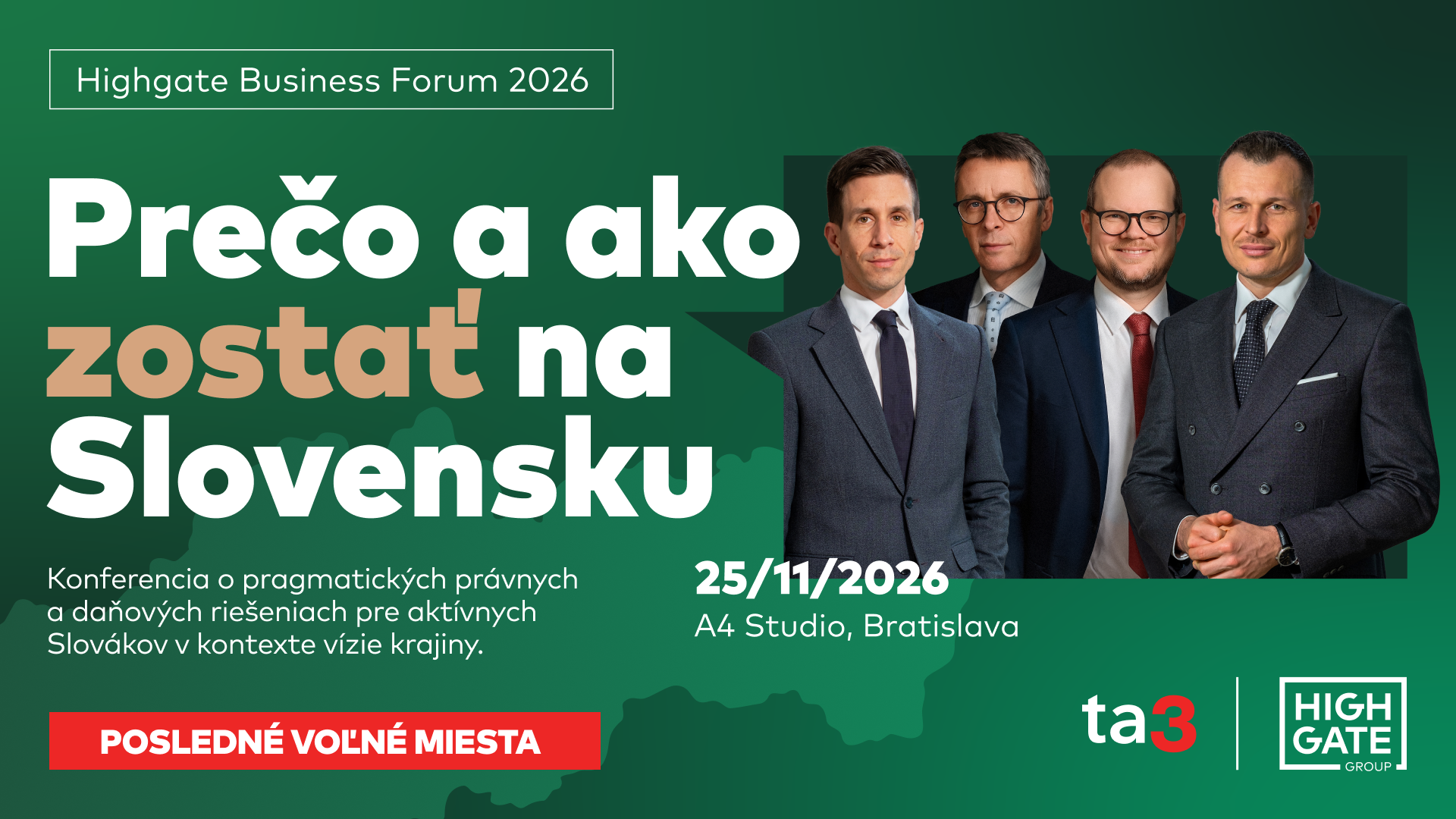
We will also address these issues in greater detail at our conference, “Why and How to Stay in Slovakia?,” which will take place on November 25, 2026, in Bratislava.
As part of this program, we’ll explain when it makes sense to set up an offshore foundation, when a holding company is sufficient, and how an entrepreneur can diversify the protection of their assets without having to leave Slovakia.
We are Highgate Group, modern advisors for your legal, tax, and accounting needs—all under one roof.
You can find more information on protecting the assets of (family-owned) businesses and their owners on our website in the ” Asset and Business Protection” section .
If you’re interested, you can subscribe to our newsletter featuring interesting and practical legal and tax information.
You can also address your specific questions during a consultation with our partner, Tomáš Demo, who specializes in asset protection and setting up legally sound and tax-efficient business structures. You can schedule a consultation here.