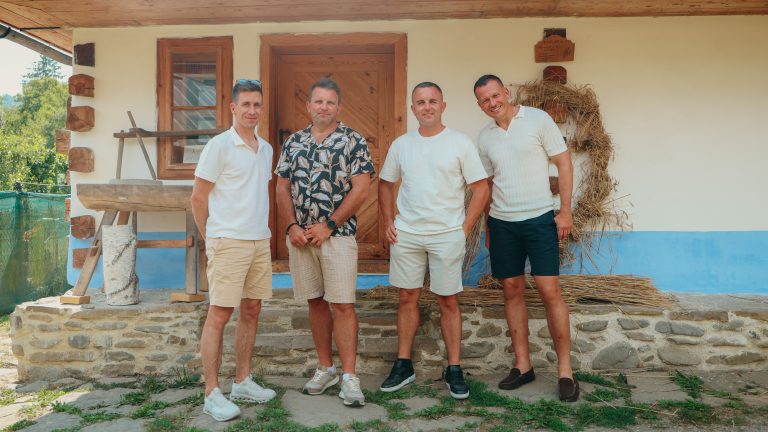

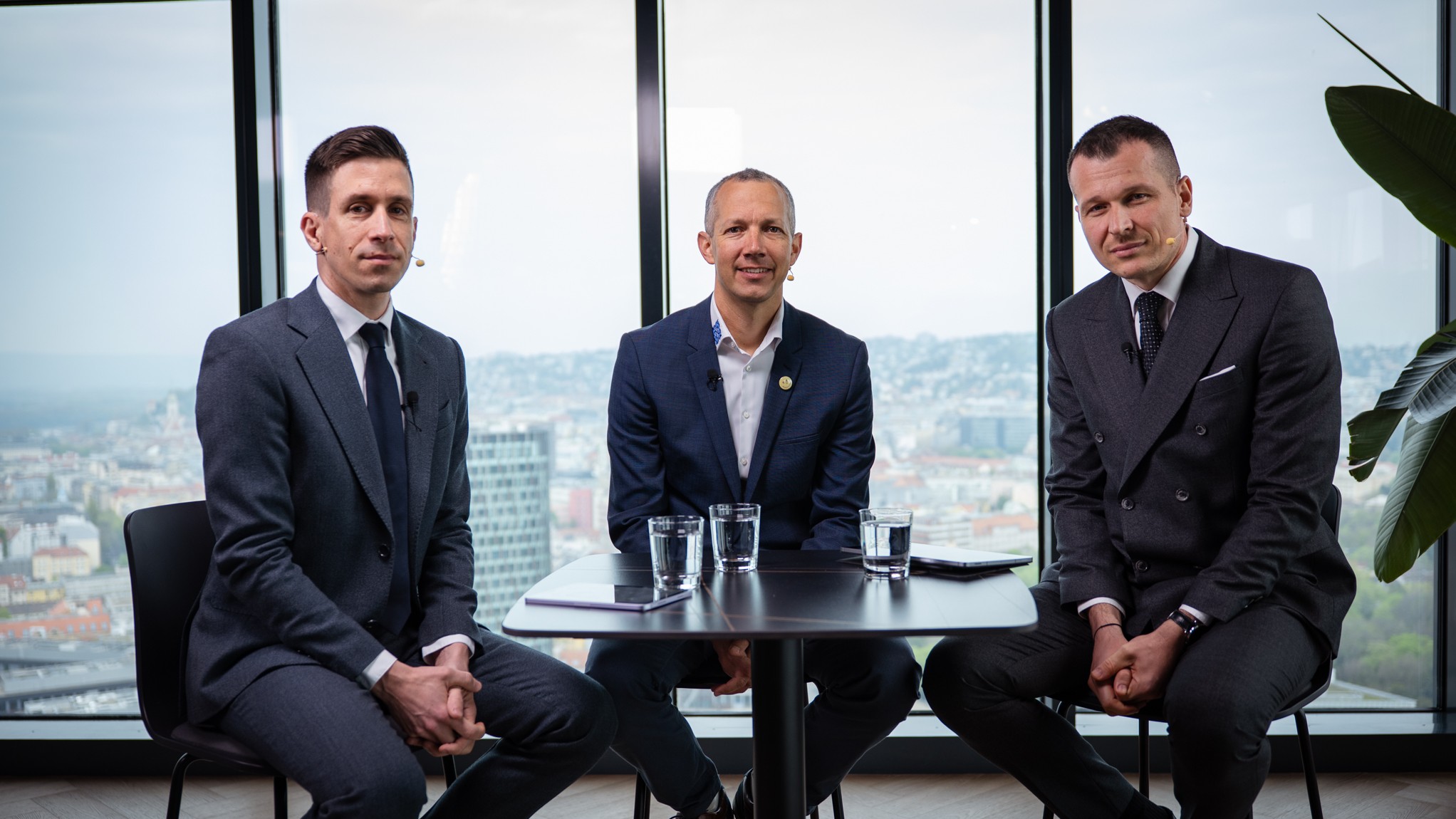
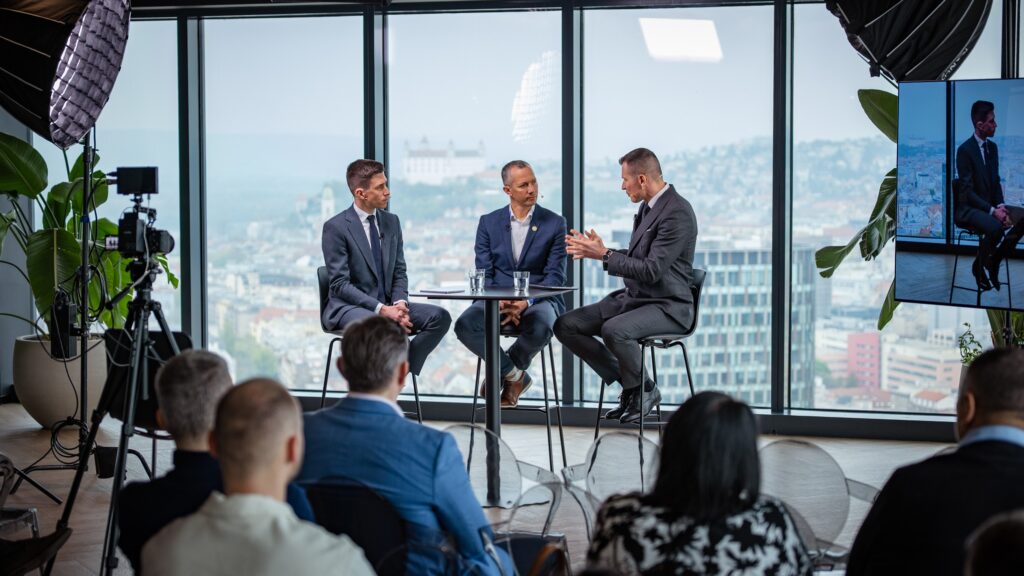
How can you motivate key people in a company to think like co-owners rather than “ordinary employees”? Peter Varga and Tomáš Demo from the Highgate Group discussed this and other topics with Juraj Hrbatý, founder of the investment firm Finax, in episode 42 of the Highgate Talks podcast . The interview addressed the topic of how ESOP programs operate in Slovakia, their legal and tax limitations, as well as why an ownership mindset can be more powerful than the salary itself.
In the podcast, Juraj Hrbatý openly admitted that his motivation to build a culture of ownership stemmed from a previous work experience, when he first acquired a stake in a company. According to him, it was precisely this experience that fundamentally changed his motivation and the way he thinks about work.
That is why, from the very beginning, Finax has sought out people with an entrepreneurial mindset—not employees who simply “do their minimum,” but people who want to actively build the company, bring new ideas to the table, and take ownership of the results.
The design of incentive parameters for ESOP plans is one of the areas we at Highgate Group have long focused on when structuring ESOP plans. In practice, we often find that motivation in the form of potential future returns is not enough. What matters is a combination of psychology, legal structure, and the tax efficiency of the incentive plan.
You can watch the full Highgate Talks #42 podcast with Juraj Hrbatý on how the ESOP works at Finax, ownership culture, employee motivation, and the legal and tax challenges involved in issuing employee shares here:
Finax did not start out with a sophisticated legal structure. The first versions of the ESOP program operated largely on the basis of trust and internal agreements. The reason was simple: for many years, Slovak legislation regarding ESOPs was complicated and tax-inefficient.
Gradually, however, Finax transitioned to a model of actual employee stock ownership. Today, the company distinguishes between:
The incentive structure itself is also interesting. Shares are not distributed automatically. Their allocation is tied to the company’s growth in value and the achievement of specific KPIs.
Finax also conducts regular company valuations, either during actual investment rounds or using internal valuation models.
The discussion naturally turned to the issue that currently concerns most Slovak ESOPs: uncertainty regarding the legal enforceability and tax efficiency of incentive schemes.
One of the most hotly debated topics was the taxation of employee shares acquired at par value. Although the 2023 Slovak amendment was intended to create more favorable conditions for the taxation of ESOPs, participants in the discussion noted that its wording still raises several issues of interpretation.
This is precisely the area we focus on intensively at Highgate Group. In practice, it’s not enough simply to “have an ESOP.” What matters most is:
Other major topics include the so-called “Good Leaver/Bad Leaver” mechanisms, buybacks of shares and equity interests, protection of founders, and the conflict between the flexibility of ESOPs and the rigidity of Slovak labor law.
Today, Finax is among the companies that are attempting to systematically build a culture of ownership on a larger scale. The company has already distributed shares to employees representing approximately 10 to 11% of the company’s equity and is simultaneously working toward a future IPO.
However, this example also shows that the Slovak ESOP landscape is still evolving. Companies often find themselves torn between:
That is precisely why setting up a high-quality ESOP today requires a combination of legal, tax, and practical considerations.
You can listen to the full interview about the ESOP program in practice on our Highgate Talks #42 podcast.
We are the Highgate Group, modern advisors for your law, tax and accounting under one roof.
If you are interested in this topic, please do not hesitate to contact us:
For more information on setting up ESOP programs, please visit this section of our website: Employee Stock Ownership Plans (ESOP)
If you are interested, you can subscribe to our newsletter for interesting practical legal and tax information.
You can address your specific questions during a consultation with our partner Tomáš Demo, who also specializes in ESOP programs. You can schedule a consultation here: