Money in a business account does not automatically belong to the company owner. So how can you legally withdraw money from your own company in the most tax-efficient way possible? When is it better to take a salary, a dividend, or invoice through a sole proprietorship, and where does legal tax optimization end? Tomáš Demo, a partner at Highgate Group, discussed the most common mistakes entrepreneurs make, the risks to their personal assets, and opportunities for effective investing on the show “Ekonomika+” on TA3.
Many Slovak business owners believe that if they own a company that generates a profit, they can treat the company’s money the same way they would their own personal funds. In practice, however, this is one of the most common misconceptions, which can have serious legal and tax consequences.
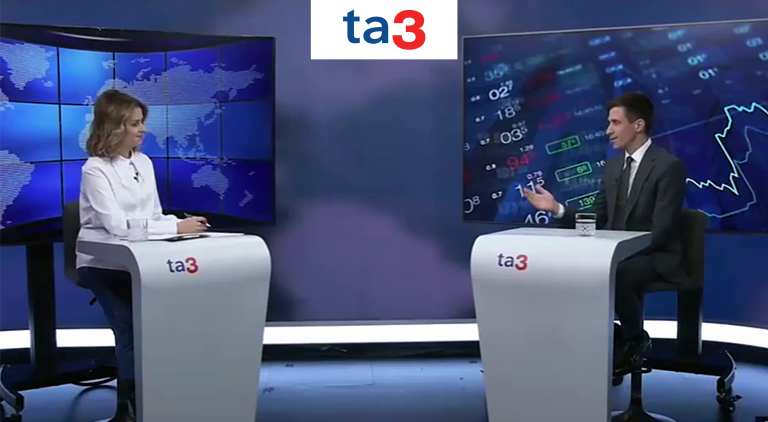
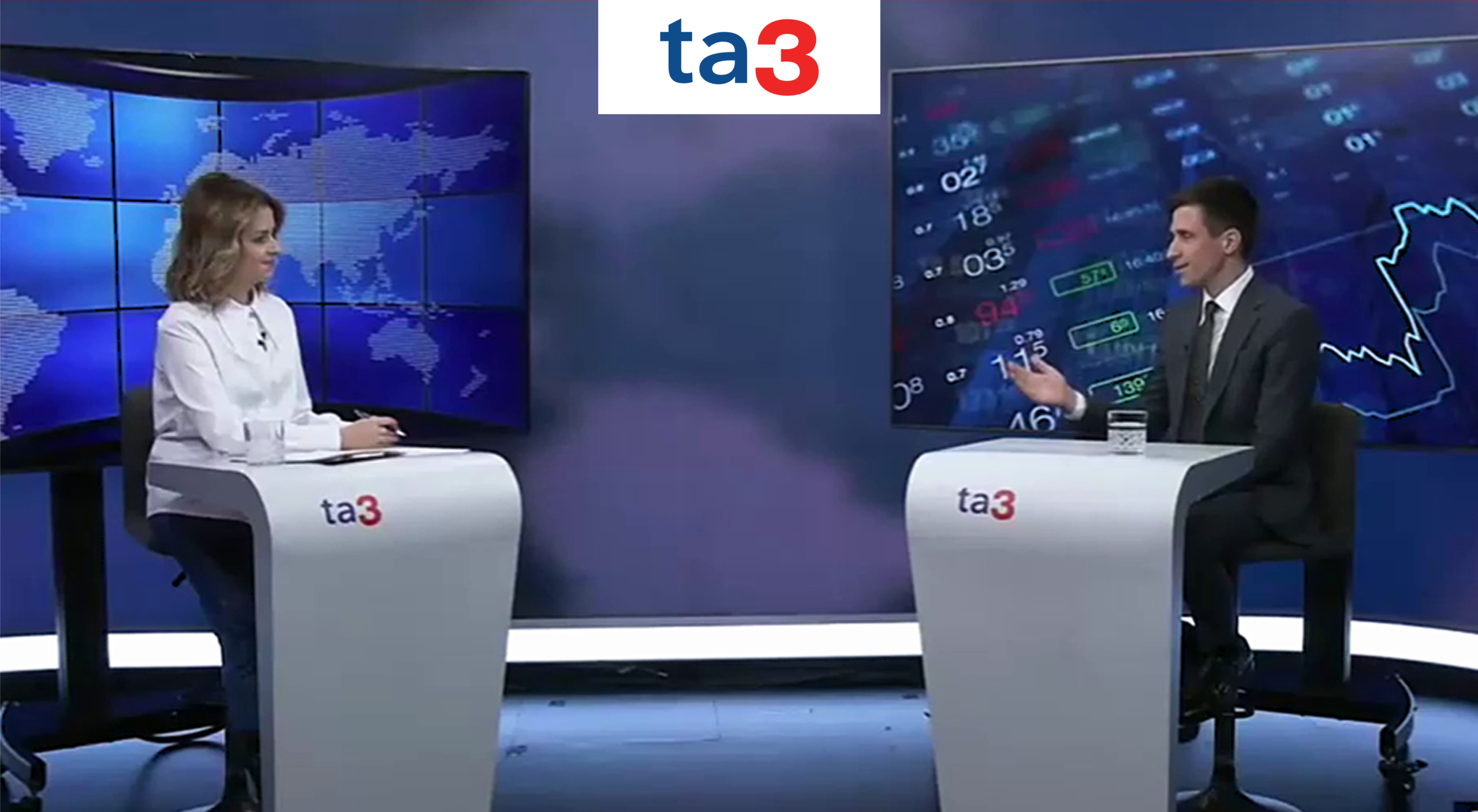
Our partner Tomáš Demo addressed this very issue in an interview with TA3 television. On the program “Ekonomika+,” he explained the options available to Slovak entrepreneurs when withdrawing funds from their own companies, which solutions are tax-efficient, and why improper handling of company assets can also jeopardize the managing director’s personal assets.
At Highgate Group, in our legal and tax advisory practice, we regularly encounter entrepreneurs seeking ways to minimize their tax and social security burden. However, when selecting a specific solution, it is not enough to consider only the amount of tax. It is equally important to take into account the legal defensibility, the economic substance of individual transactions, and the long-term consequences for the business owner and his or her personal assets.
One of the basic rules of doing business through a corporation is the separation of the company’s assets from the owner’s personal assets. Although an entrepreneur may be the sole shareholder and also the managing director of the company, the money in its account is not automatically his personal funds. It belongs to the company, which has its own obligations and must primarily respect the interests of its creditors.
As Tomáš Demo pointed out in an interview with TA3, it is precisely the notion that “my company means my money” that leads, in practice, to several problematic ways of managing company assets.
In addition to standard salary payments, executive compensation, or dividends, entrepreneurs also use invoicing through their own sole proprietorships, other companies, or licensing agreements.
However, the use of company funds for personal expenses poses a particular problem.
This includes, for example, situations where a business owner uses a company credit card to pay for personal purchases, vacations, or other expenses unrelated to business activities. Similarly problematic can be cash withdrawals from a company account without proper accounting, which subsequently lead to an unreasonably high cash balance.
Such practices may raise questions from tax authorities and, in certain cases, lead to additional tax assessments or other penalties. However, the risks may not be limited to the company alone.
Under certain circumstances, a managing director may be personally liable for damages caused by a breach of his or her duties; if creditors are unable to recover their claims from the company, they may, under certain conditions, assert these claims against the managing directors as well.
The notion that a limited liability company will protect an entrepreneur’s personal assets under all circumstances is therefore incorrect. When managing company assets, it is necessary to consider not only tax efficiency but also the legal consequences of individual decisions.
There is no one-size-fits-all guide to the most tax-efficient way to withdraw money from your own company. According to Tomáš Demo, the optimal solution depends primarily on the entrepreneur’s income level, the nature of their business, and their personal financial needs.
For those with lower incomes, it may be more advantageous to run a business as a sole proprietorship. For those with higher incomes, a limited liability company and a combination of multiple payment methods may make more sense.
One solution could be a combination of an appropriate salary or compensation for the CEO and the payment of dividends. This approach makes it possible to take into account not only the current tax and social security burden but also the entrepreneur’s long-term social security coverage. It is precisely this aspect that is often overlooked in tax optimization.
Business owners naturally try to minimize their tax and social security contributions, but they tend to give less consideration to how these affect their future retirement, social security, or ability to obtain a mortgage. Therefore, the goal of an effective compensation structure may not be to minimize contributions entirely, but rather to strike a balance between tax savings and adequate social security coverage.
A specific issue is an executive’s invoicing of his or her own company. Can an executive, therefore, invoice his or her own company for services?
As Tomáš Demo explained, the decisive factor is the actual nature of the work performed.
If a managing director merely manages the company’s business and represents it externally, while invoicing for these activities through a sole proprietorship or another company, such invoicing may be difficult to justify from both a legal and tax perspective.
The situation is different if, in addition to performing his or her duties, the managing director provides the company with separate professional services. An example would be a managing director who also performs skilled trade work, does programming, or provides technical services that have their own economic value.
In such a case, invoicing may be justifiable because it does not involve the actual performance of the duties of a managing director, but rather a separate business activity. What is decisive here is not merely the formal conclusion of a contract or the issuance of an invoice, but above all the actual nature of the services provided.
A similar approach should be taken to licensing fees or invoicing through other companies owned by the entrepreneur. Each such arrangement must have its own economic justification and correspond to the activities actually carried out.
On the show “Ekonomika+,” our partner Tomáš Demo explains how to legally and tax-efficiently withdraw money from your own company, what risks are involved in invoicing as a CEO, and how to properly separate business and personal assets.
Where does legal tax optimization end?
Tax optimization is a natural and legitimate part of doing business. An entrepreneur has the right to choose the business structure and compensation method that is most advantageous for him or her from a legal and tax perspective.
However, the line between legal optimization and abuse of the law can be quite thin in certain situations. As Tomáš Demo pointed out in an interview with TA3, the mere fact that a certain practice is not expressly prohibited by law does not automatically mean that it is legally sound.
An example is the purposeful establishment or rotation of multiple companies to avoid reaching the turnover threshold required for VAT registration.
If, after reaching a certain level of revenue, an entrepreneur transfers the same business activity to another company without a genuine economic reason, there is a risk that such a practice could be deemed an abuse of rights.
Ownership of multiple companies in and of itself is not illegal. What matters is the economic substance of the specific arrangement and the reasons why the business owner uses the individual companies.
Similar issues arise in connection with invoicing between related parties, the use of license agreements, or when establishing partnerships with self-employed individuals.
The so-called “Švarc system”—that is, the use of commercial contracts to perform work that is, in reality, in the nature of dependent employment—is one of the common risks faced by Slovak entrepreneurs.
However, not every collaboration with a sole proprietor is automatically problematic.
When properly structured, a commercial relationship can be a legitimate form of collaboration. The key is that the actual arrangement must correspond to the chosen legal framework and not meet the criteria for dependent employment.
In some cases, a hybrid model—in which a company combines employment relationships with separate business contracts—may also be an appropriate solution.
At Highgate Group, we are deeply committed to designing such legally and fiscally sustainable models. We help our clients identify risks in existing structures and find solutions that enable effective business operations without unnecessarily exposing them to tax, labor, or other legal risks.
The fundamental rule remains that tax optimization should be based on the actual economic substance of transactions, not merely on their formal legal structure.
Effective management of a company’s profits does not end with their distribution.
Business owners often face the question of whether to leave available funds in the company and reinvest them, or to withdraw them and make investments as individuals.
Investment real estate is a typical example.
When deciding whether to purchase real estate in the name of an individual or a legal entity, the primary consideration should be the purpose of the investment.
Long-term rental of real estate may have different tax implications than its repeated purchase, renovation, and subsequent sale at a profit.
When holding real estate for the long term, a natural person may benefit from the possibility of exempting income from the sale after meeting the statutory conditions, including the relevant five-year holding period.
Conversely, in a business model based on the regular purchase, renovation, and sale of real estate—known as “flipping”—it may make more sense to make investments through a business entity.
A similar question arises when investing in stocks and ETF funds.
In Slovakia, individuals may claim a tax exemption on income from the sale of certain securities traded on a regulated market, provided they meet the statutory conditions, including an annual holding period requirement.
For long-term investments in such assets, direct ownership by an individual may therefore be more tax-advantageous.
For other investments, however—such as investments in business entities, private equity, or venture capital projects—ownership through a legal entity may be more appropriate.
A properly structured holding company structure also plays a significant role in this regard.
A holding company can enable more efficient reinvestment of profits, the separation of business risks, and—provided the relevant legal conditions are met—the use of tax exemptions for certain transactions.
One example is the tax exemption for a legal entity’s income from the sale of a business interest after meeting the conditions set forth by law, which include a minimum holding period and a required ownership stake.
Another advantage may be the tax treatment of dividends paid between business entities, which, provided certain conditions are met, allows for the distribution and subsequent reinvestment of profits without additional taxation of the dividend itself.
However, a holding company does not automatically provide protection against all business risks.
As Tomáš Demo pointed out, entrepreneurs should not assume that establishing a company or a holding structure completely eliminates the possibility of personal liability.
If a managing director violates his or her legal obligations—for example, by causing harm to the company’s creditors through the unauthorized disposal of company assets—his or her personal assets may also be at risk under certain circumstances.
This is precisely why it is important to take a comprehensive approach to asset protection.
It is not just a matter of choosing the right legal form for the business or the lowest tax burden, but also of properly structuring ownership relationships, contractual documentation, financing, and the segregation of individual business risks.
At Highgate Group, we help entrepreneurs design and implement legal, tax, and asset structures that take into account not only their current business needs but also the long-term protection and appreciation of their assets.
By integrating legal, tax, and accounting advisory services, we are able to evaluate individual solutions within a broader context and design them to be cost-effective, legally sound, and practically feasible.
We’ll also address issues related to effectively withdrawing funds from your own company, tax optimization, and asset protection in greater detail at our conference “Why and How to Stay in Slovakia?”, which will take place on November 25, 2026, at A4 Studio in Bratislava.

The program will include practical solutions to problems that Slovak entrepreneurs regularly face.
These include, for example, the payment of compensation to executives and partners, invoicing to one’s own company, the use of license agreements, company cars, and travel expense reimbursements; the risks of the “Švarc system”; the personal liability of statutory representatives; and the proper structuring of holding companies and foreign business structures.
Another specific topic will be the line between legal tax optimization and actions that may have tax, civil, or criminal consequences.
The goal of the conference is to show entrepreneurs how they can take advantage of existing legal and tax options so that their businesses are not only efficient but also sustainable in the long term.
The basic rule remains that company assets cannot be treated as private property, and every significant decision must have both legal and economic justification.
We are Highgate Group, modern advisors for your legal, tax, and accounting needs—all under one roof.
You can find more information on protecting the assets of (family-owned) businesses and their owners on our website in the ” Asset and Business Protection” section .
If you’re interested, you can subscribe to our newsletter featuring interesting and practical legal and tax information.
You can also address your specific questions during a consultation with our partner, Tomáš Demo, who specializes in asset protection and setting up legally sound and tax-efficient business structures. You can schedule a consultation here.